The Mulde, also known as the Vereinte Mulde or Vereinigte Mulde, is a left, non-navigable tributary of the Elbe. It forms southeast of Leipzig near Sermuth (Saxony) through the confluence of two major source rivers, the longer Zwickauer Mulde and the Freiberger Mulde, which drains a larger catchment area with greater discharge.
The river's catchment area covers large parts of Saxony and especially the vast majority of the northern slopes of the Ore Mountains. With a discharge of nearly 73 m³/s at its mouth, it is the fourth largest tributary of the Elbe.
Source: WikipediaThe Mulde, also known as the Vereinte Mulde or Vereinigte Mulde, is a left, non-navigable tributary of the Elbe. It forms southeast of Leipzig near Sermuth (Saxony) through the confluence of two major source rivers, the longer Zwickauer Mulde and the Freiberger Mulde, which drains a larger catchment area with greater discharge.
The river's catchment area covers large parts of Saxony and especially the vast majority of the northern slopes of the Ore Mountains. With a discharge of nearly 73 m³/s at its mouth, it is the fourth largest tributary of the Elbe.
Source: WikipediaDie Mulde, auch Vereinte Mulde oder Vereinigte Mulde, ist ein linker, nicht schiffbarer Nebenfluss der Elbe. Sie entsteht südöstlich von Leipzig bei Sermuth (Sachsen) durch Vereinigung zweier großer Quellflüsse, der längeren Zwickauer Mulde und der ein größeres Einzugsgebiet bei größerem Abfluss entwässernden Freiberger Mulde.
Das Einzugsgebiet des Flusses umfasst große Teile Sachsens und besonders den weitaus größten Teil der Nordabdachung des Erzgebirges. Mit einer Wasserführung von annähernd 73 m³/s an der Mündung[7] ist sie der viertgrößte Nebenfluss der Elbe.
Quelle: Wikipedia
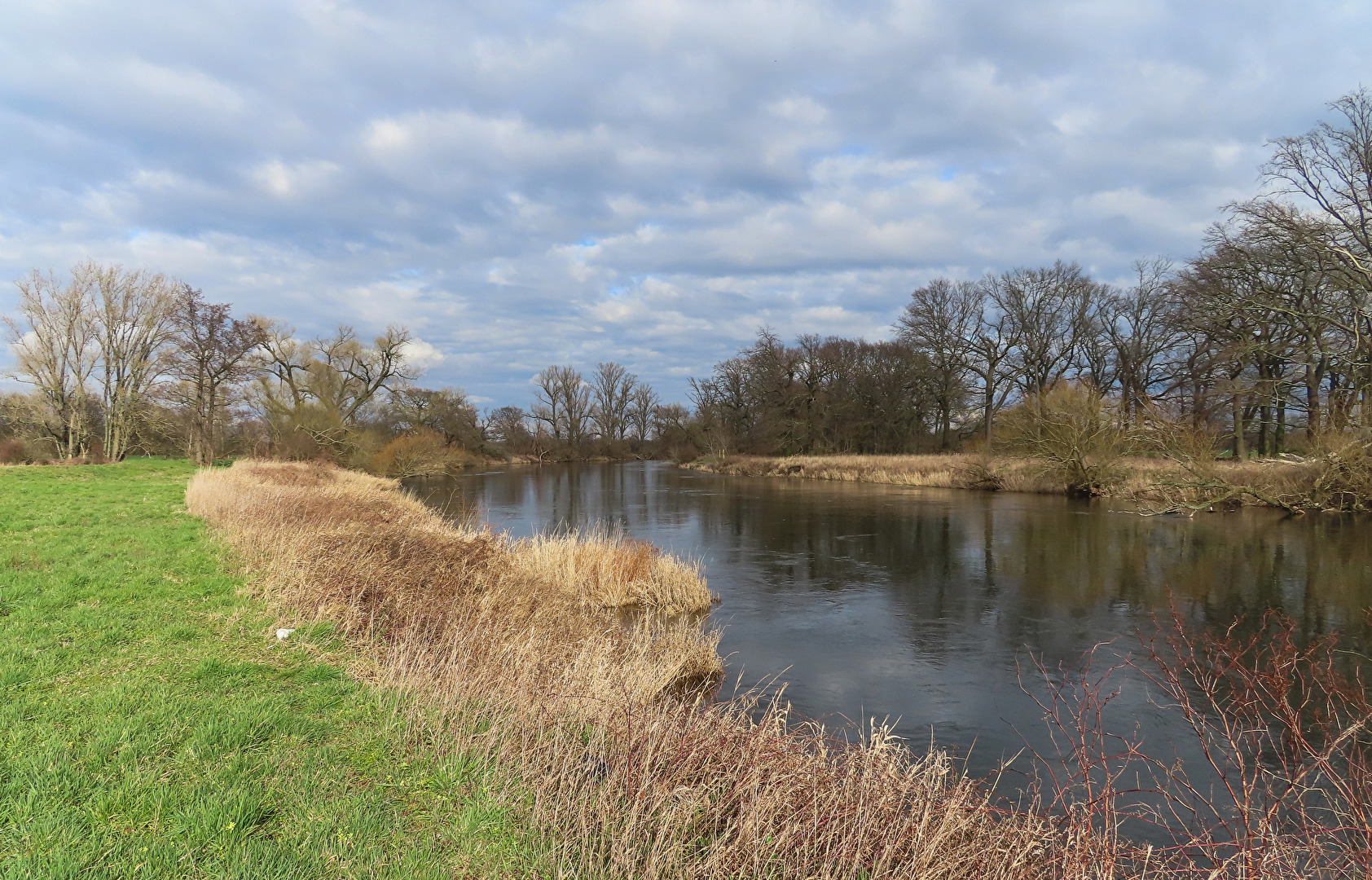







The MuldeThe MuldeDie Mulde
The Mulde, also known as the Vereinte Mulde or Vereinigte Mulde, is a left, non-navigable tributary of the Elbe. It forms southeast of Leipzig near Sermuth (Saxony) through the confluence of two major source rivers, the longer Zwickauer Mulde and the Freiberger Mulde, which drains a larger catchment area with greater discharge.The river's catchment area covers large parts of Saxony and especially the vast majority of the northern slopes of the Ore Mountains. With a discharge of nearly 73 m³/s at its mouth, it is the fourth largest tributary of the Elbe.
Source: WikipediaThe Mulde, also known as the Vereinte Mulde or Vereinigte Mulde, is a left, non-navigable tributary of the Elbe. It forms southeast of Leipzig near Sermuth (Saxony) through the confluence of two major source rivers, the longer Zwickauer Mulde and the Freiberger Mulde, which drains a larger catchment area with greater discharge.
The river's catchment area covers large parts of Saxony and especially the vast majority of the northern slopes of the Ore Mountains. With a discharge of nearly 73 m³/s at its mouth, it is the fourth largest tributary of the Elbe.
Source: WikipediaDie Mulde, auch Vereinte Mulde oder Vereinigte Mulde, ist ein linker, nicht schiffbarer Nebenfluss der Elbe. Sie entsteht südöstlich von Leipzig bei Sermuth (Sachsen) durch Vereinigung zweier großer Quellflüsse, der längeren Zwickauer Mulde und der ein größeres Einzugsgebiet bei größerem Abfluss entwässernden Freiberger Mulde.
Das Einzugsgebiet des Flusses umfasst große Teile Sachsens und besonders den weitaus größten Teil der Nordabdachung des Erzgebirges. Mit einer Wasserführung von annähernd 73 m³/s an der Mündung[7] ist sie der viertgrößte Nebenfluss der Elbe.
Quelle: Wikipedia