Built in 1844, the monastery is the most distinctive landmark of the town of Rhede. Until the early 1980s, it was home to the Steyler Missionary Sisters, who managed it and trained young women in housekeeping. After the Klausenhof Academy took over the monastery in 1983 for a symbolic one euro, it fell into a deep sleep – use was only possible to a limited extent due to the dilapidated building structure. In 2013, intensive planning began for a comprehensive renovation and repurposing, and construction work started in 2020. "The goal was to revive the monastery as a lively meeting place for different generations and social groups," says Astrid Vogell, board member of the Klausenhof Academy Foundation. "With this inclusive concept, we have succeeded in preserving this important house for the region while creating space for the people of today."Built in 1844, the monastery is the most distinctive landmark of the town of Rhede. Until the early 1980s, it was home to the Steyler Missionary Sisters, who managed it and trained young women in housekeeping. After the Klausenhof Academy took over the monastery in 1983 for a symbolic one euro, it fell into a deep sleep – use was only possible to a limited extent due to the dilapidated building structure. In 2013, intensive planning began for a comprehensive renovation and repurposing, and construction work started in 2020. "The goal was to revive the monastery as a lively meeting place for different generations and social groups," says Astrid Vogell, board member of the Klausenhof Academy Foundation. "With this inclusive concept, we have succeeded in preserving this important house for the region while creating space for the people of today."Das 1844 erbaute Kloster ist das markanteste Wahrzeichen der Stadt Rhede. Bis Anfang der 1980er Jahre war es Heimat der Steyler Missionsschwestern, die es bewirtschafteten und junge Frauen in der Hauswirtschaft ausbildeten. Nachdem die Akademie Klausenhof das Kloster 1983 für einen symbolischen Euro übernommen hatte, fiel es in einen Dornröschenschlaf – die Nutzung war aufgrund der maroden Bausubstanz nur noch eingeschränkt möglich. Im Jahr 2013 begannen die intensiven Planungen für eine umfassende Sanierung und Umnutzung, 2020 starteten die Bauarbeiten. „Ziel war es, das Kloster als lebendigen Treffpunkt für unterschiedliche Generationen und soziale Gruppen wiederzubeleben“, sagt Astrid Vogell, Vorstand der Stiftung Akademie Klausenhof. „Mit diesem inklusiven Konzept ist es uns gelungen, das für die Region bedeutende Haus zu erhalten und gleichzeitig Raum für die Menschen von heute zu schaffen.“
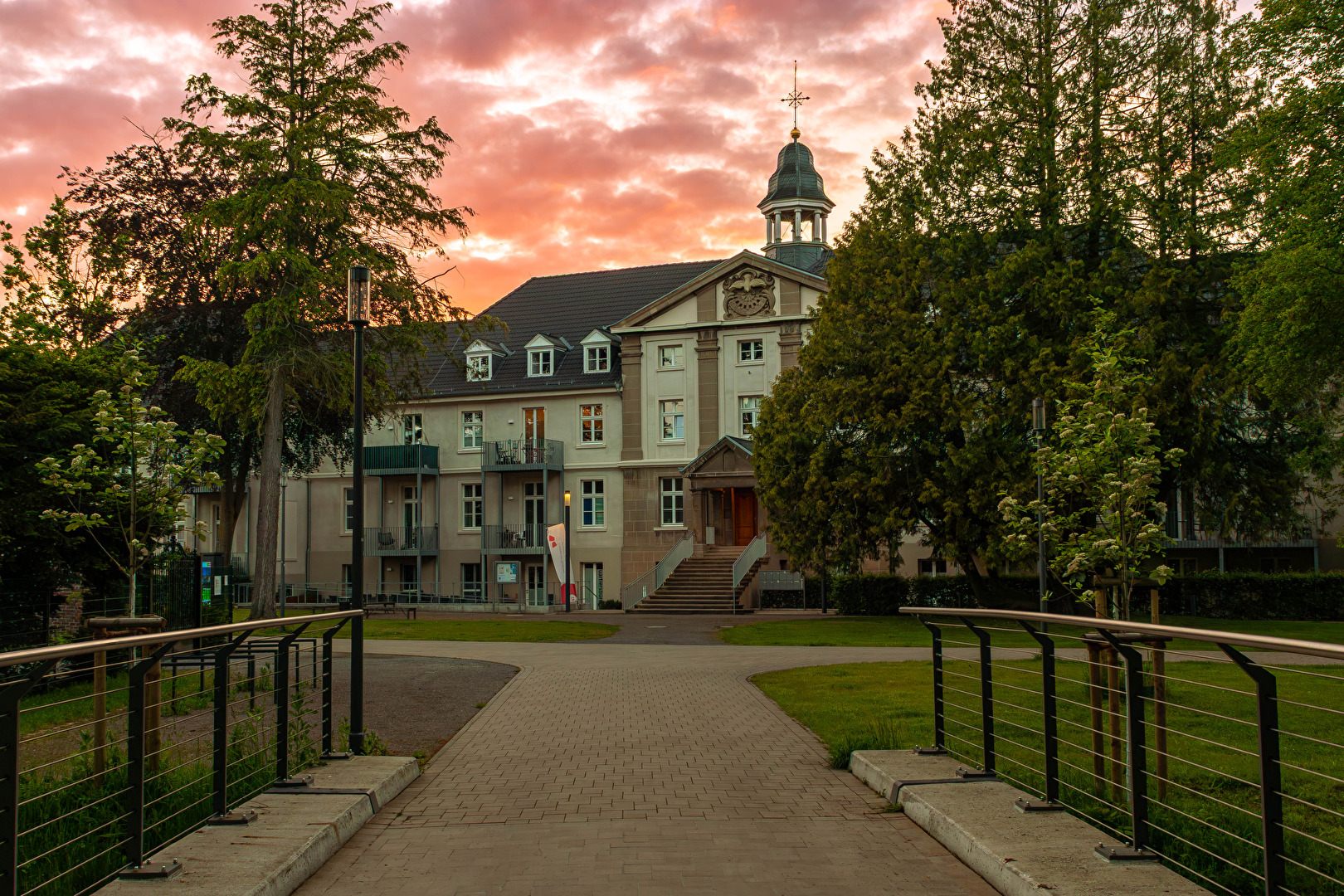




















Former MonasteryFormer MonasteryEhemals Kloster
Built in 1844, the monastery is the most distinctive landmark of the town of Rhede. Until the early 1980s, it was home to the Steyler Missionary Sisters, who managed it and trained young women in housekeeping. After the Klausenhof Academy took over the monastery in 1983 for a symbolic one euro, it fell into a deep sleep – use was only possible to a limited extent due to the dilapidated building structure. In 2013, intensive planning began for a comprehensive renovation and repurposing, and construction work started in 2020. "The goal was to revive the monastery as a lively meeting place for different generations and social groups," says Astrid Vogell, board member of the Klausenhof Academy Foundation. "With this inclusive concept, we have succeeded in preserving this important house for the region while creating space for the people of today."Built in 1844, the monastery is the most distinctive landmark of the town of Rhede. Until the early 1980s, it was home to the Steyler Missionary Sisters, who managed it and trained young women in housekeeping. After the Klausenhof Academy took over the monastery in 1983 for a symbolic one euro, it fell into a deep sleep – use was only possible to a limited extent due to the dilapidated building structure. In 2013, intensive planning began for a comprehensive renovation and repurposing, and construction work started in 2020. "The goal was to revive the monastery as a lively meeting place for different generations and social groups," says Astrid Vogell, board member of the Klausenhof Academy Foundation. "With this inclusive concept, we have succeeded in preserving this important house for the region while creating space for the people of today."Das 1844 erbaute Kloster ist das markanteste Wahrzeichen der Stadt Rhede. Bis Anfang der 1980er Jahre war es Heimat der Steyler Missionsschwestern, die es bewirtschafteten und junge Frauen in der Hauswirtschaft ausbildeten. Nachdem die Akademie Klausenhof das Kloster 1983 für einen symbolischen Euro übernommen hatte, fiel es in einen Dornröschenschlaf – die Nutzung war aufgrund der maroden Bausubstanz nur noch eingeschränkt möglich. Im Jahr 2013 begannen die intensiven Planungen für eine umfassende Sanierung und Umnutzung, 2020 starteten die Bauarbeiten. „Ziel war es, das Kloster als lebendigen Treffpunkt für unterschiedliche Generationen und soziale Gruppen wiederzubeleben“, sagt Astrid Vogell, Vorstand der Stiftung Akademie Klausenhof. „Mit diesem inklusiven Konzept ist es uns gelungen, das für die Region bedeutende Haus zu erhalten und gleichzeitig Raum für die Menschen von heute zu schaffen.“