Church & GraniteChurch & GraniteKirche & Granit
I think: an extraordinary photo subject!
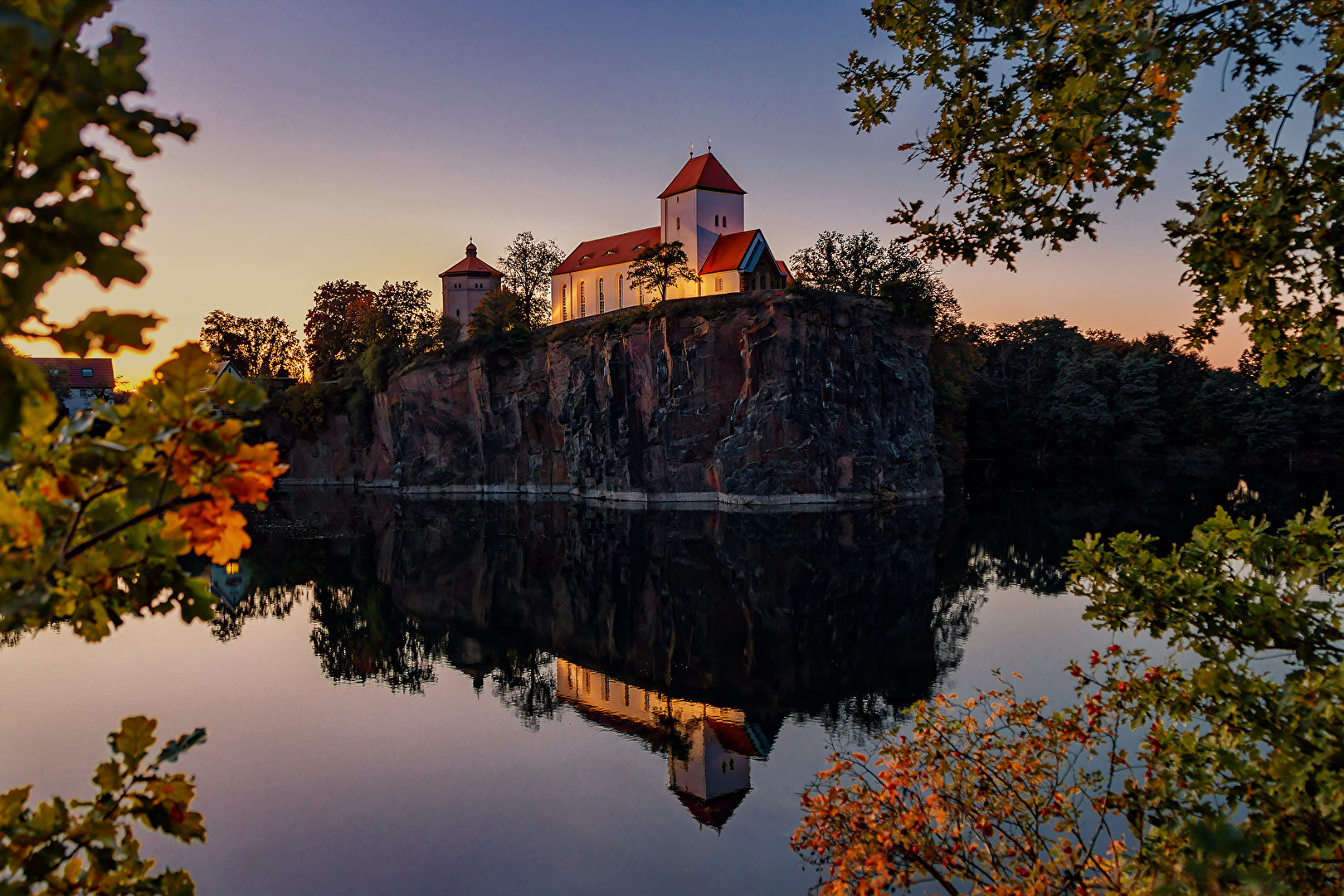
Quote from Wikipedia: The Bergkirche Beucha is a sacred building originally Romanesque, built in the 13th century and expanded in 1848, belonging to the Evangelical Lutheran Church of Saxony, located on the Kirchberg of Beucha, a district of the municipality of Brandis in the Saxon district of Leipzig. The church is a protected monument.
The Beucha granite porphyry – a microsyenogranite based on its mineral composition – is especially known as a building stone used in the construction of the Völkerschlachtdenkmal in Leipzig.I think: an extraordinary photo subject!
Quote from Wikipedia: The Bergkirche Beucha is a sacred building originally Romanesque, built in the 13th century and expanded in 1848, belonging to the Evangelical Lutheran Church of Saxony, located on the Kirchberg of Beucha, a district of the municipality of Brandis in the Saxon district of Leipzig. The church is a protected monument.
The Beucha granite porphyry – a microsyenogranite based on its mineral composition – is especially known as a building stone used in the construction of the Völkerschlachtdenkmal in Leipzig.Ich finde: außergewöhnliches Fotomotiv!
Zitat Wikipedia: Die Bergkirche Beucha ist ein im 13. Jahrhundert entstandener und 1848 erweiterter, ursprünglich romanischer Sakralbau der Evangelisch-Lutherischen Landeskirche Sachsens auf dem Kirchberg von Beucha, einem Ortsteil der Gemeinde Brandis im sächsischen Landkreis Leipzig. Die Kirche steht unter Denkmalschutz.
Der Beuchaer Granitporphyr – nach der Geisteinszusammensetzung ein Mikrosyenogranit – ist vor allem als Werkstein beim Bau des Völkerschlachtdenkmals in Leipzig bekannt geworden.













Church & GraniteChurch & GraniteKirche & Granit
I think: an extraordinary photo subject!Quote from Wikipedia: The Bergkirche Beucha is a sacred building originally Romanesque, built in the 13th century and expanded in 1848, belonging to the Evangelical Lutheran Church of Saxony, located on the Kirchberg of Beucha, a district of the municipality of Brandis in the Saxon district of Leipzig. The church is a protected monument.
Kirchbruch Beucha, photo: Anja Hartmann
Geotope type: Abandoned quarry
Rock: Beucha granite porphyry
Geological era: Permian (Rotliegend)
The Beucha granite porphyry – a microsyenogranite based on its mineral composition – is especially known as a building stone used in the construction of the Völkerschlachtdenkmal in Leipzig.I think: an extraordinary photo subject!
Quote from Wikipedia: The Bergkirche Beucha is a sacred building originally Romanesque, built in the 13th century and expanded in 1848, belonging to the Evangelical Lutheran Church of Saxony, located on the Kirchberg of Beucha, a district of the municipality of Brandis in the Saxon district of Leipzig. The church is a protected monument.
Kirchbruch Beucha, photo: Anja Hartmann
Geotope type: Abandoned quarry
Rock: Beucha granite porphyry
Geological era: Permian (Rotliegend)
The Beucha granite porphyry – a microsyenogranite based on its mineral composition – is especially known as a building stone used in the construction of the Völkerschlachtdenkmal in Leipzig.Ich finde: außergewöhnliches Fotomotiv!
Zitat Wikipedia: Die Bergkirche Beucha ist ein im 13. Jahrhundert entstandener und 1848 erweiterter, ursprünglich romanischer Sakralbau der Evangelisch-Lutherischen Landeskirche Sachsens auf dem Kirchberg von Beucha, einem Ortsteil der Gemeinde Brandis im sächsischen Landkreis Leipzig. Die Kirche steht unter Denkmalschutz.
Kirchbruch Beucha, Foto: Anja Hartmann
Geotoptyp: Auflässiger Steinbruch
Gestein: Beuchaer Granitporphyr
Geologisches Zeitalter: Perm (Rotliegend)
Der Beuchaer Granitporphyr – nach der Geisteinszusammensetzung ein Mikrosyenogranit – ist vor allem als Werkstein beim Bau des Völkerschlachtdenkmals in Leipzig bekannt geworden.