Old Harbor Office DortmundOld Harbor Office DortmundAltes Hafenamt Dortmund
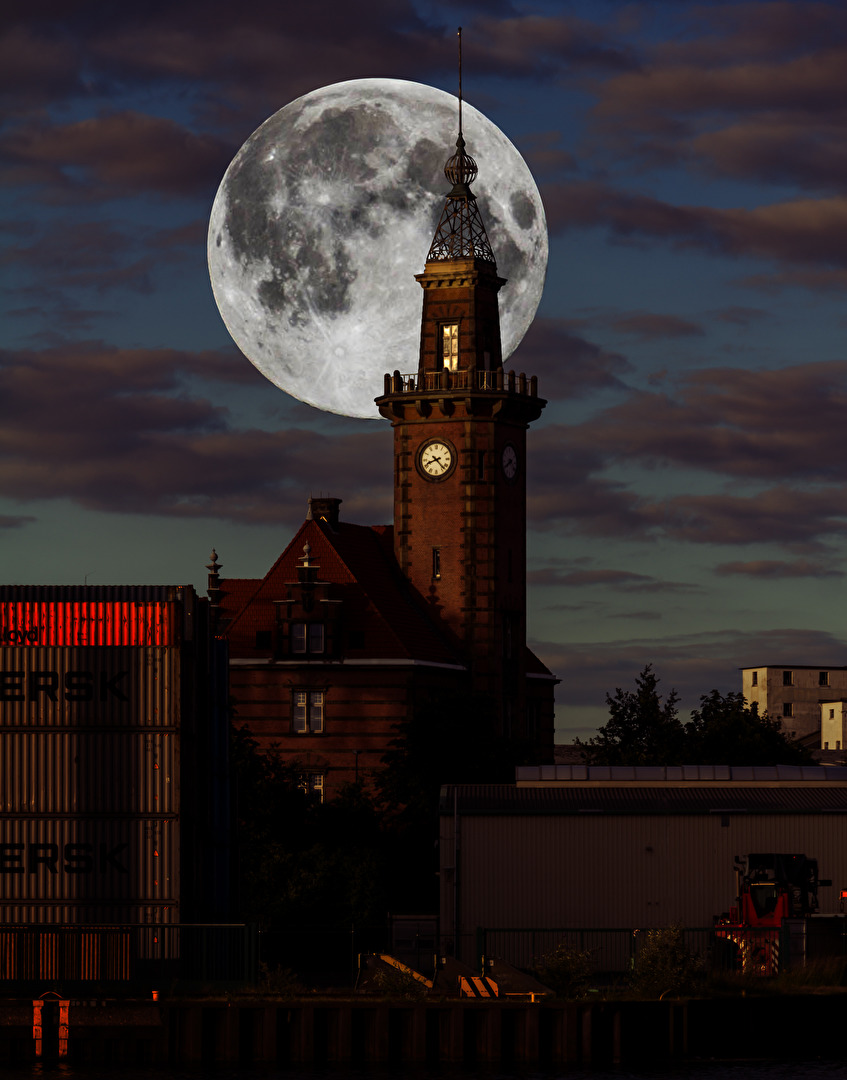
The Old Harbor Office Dortmund was built in 1898 in the Neo-Renaissance style in the newly established Dortmund harbor according to plans by architect and city building inspector Friedrich Kullrich. The building was used as the harbor administration until 1962. From 1982 to 1987, it was extensively restored and today is one of the few public buildings in Dortmund from the Wilhelmine era.
The building, a landmark with its 38-meter-high tower visible from afar, houses a mosaic floor in its hallway depicting a medieval cog with raised sails. On the sail is the Dortmund eagle, and at the masthead flies the red and white pennant of the city. A portal framed by three-quarter columns ends in a carved Neptune head. Above the cornice, a granite memorial plaque with a bronze relief bears the likeness of Wilhelm II, commemorating the visit of the German Emperor on August 11, 1899. Under the parapet of the tower room can be found sThe Old Harbor Office Dortmund was built in 1898 in the Neo-Renaissance style in the newly established Dortmund harbor according to plans by architect and city building inspector Friedrich Kullrich. The building was used as the harbor administration until 1962. From 1982 to 1987, it was extensively restored and today is one of the few public buildings in Dortmund from the Wilhelmine era.
The building, a landmark with its 38-meter-high tower visible from afar, houses a mosaic floor in its hallway depicting a medieval cog with raised sails. On the sail is the Dortmund eagle, and at the masthead flies the red and white pennant of the city. A portal framed by three-quarter columns ends in a carved Neptune head. Above the cornice, a granite memorial plaque with a bronze relief bears the likeness of Wilhelm II, commemorating the visit of the German Emperor on August 11, 1899. Under the parapet of the tower room can be found sDas Alte Hafenamt Dortmund wurde 1898 im Stil der Neorenaissance im neu gegründeten Hafen Dortmund nach Plänen des Architekten und Stadtbauinspektors Friedrich Kullrich errichtet. Als Hafenverwaltung wurde das Gebäude bis zum Jahr 1962 genutzt. Von 1982 bis 1987 wurde es aufwändig restauriert und ist heute eines der wenigen öffentlichen Häuser in Dortmund aus der Wilhelminischen Zeit.
Das als Landmarke, mit seinem 38 Meter hohen Turm, weithin sichtbare Gebäude beherbergt in seiner Flurhalle einen Mosaikboden, auf dem eine mittelalterliche Kogge mit gehissten Segeln abgebildet ist. Auf dem Segel findet sich der Dortmunder Adler und an der Mastspitze weht der rot-weiße Wimpel der Stadt. Ein von Dreiviertelsäulen umrahmtes Portal endet in einem ausgemeißelten Neptunkopf. Über dem Gesims enthält eine Gedenkplatte aus Granit in einem Bronzerelief das Bildnis von Wilhelm II. und erinnert so an den Besuch des deutschen Kaisers am 11. August 1899. Unter der Brüstung des Turmzimmers finden s




Old Harbor Office DortmundOld Harbor Office DortmundAltes Hafenamt Dortmund
The Old Harbor Office Dortmund was built in 1898 in the Neo-Renaissance style in the newly established Dortmund harbor according to plans by architect and city building inspector Friedrich Kullrich. The building was used as the harbor administration until 1962. From 1982 to 1987, it was extensively restored and today is one of the few public buildings in Dortmund from the Wilhelmine era.The building, a landmark with its 38-meter-high tower visible from afar, houses a mosaic floor in its hallway depicting a medieval cog with raised sails. On the sail is the Dortmund eagle, and at the masthead flies the red and white pennant of the city. A portal framed by three-quarter columns ends in a carved Neptune head. Above the cornice, a granite memorial plaque with a bronze relief bears the likeness of Wilhelm II, commemorating the visit of the German Emperor on August 11, 1899. Under the parapet of the tower room can be found sThe Old Harbor Office Dortmund was built in 1898 in the Neo-Renaissance style in the newly established Dortmund harbor according to plans by architect and city building inspector Friedrich Kullrich. The building was used as the harbor administration until 1962. From 1982 to 1987, it was extensively restored and today is one of the few public buildings in Dortmund from the Wilhelmine era.
The building, a landmark with its 38-meter-high tower visible from afar, houses a mosaic floor in its hallway depicting a medieval cog with raised sails. On the sail is the Dortmund eagle, and at the masthead flies the red and white pennant of the city. A portal framed by three-quarter columns ends in a carved Neptune head. Above the cornice, a granite memorial plaque with a bronze relief bears the likeness of Wilhelm II, commemorating the visit of the German Emperor on August 11, 1899. Under the parapet of the tower room can be found sDas Alte Hafenamt Dortmund wurde 1898 im Stil der Neorenaissance im neu gegründeten Hafen Dortmund nach Plänen des Architekten und Stadtbauinspektors Friedrich Kullrich errichtet. Als Hafenverwaltung wurde das Gebäude bis zum Jahr 1962 genutzt. Von 1982 bis 1987 wurde es aufwändig restauriert und ist heute eines der wenigen öffentlichen Häuser in Dortmund aus der Wilhelminischen Zeit.
Das als Landmarke, mit seinem 38 Meter hohen Turm, weithin sichtbare Gebäude beherbergt in seiner Flurhalle einen Mosaikboden, auf dem eine mittelalterliche Kogge mit gehissten Segeln abgebildet ist. Auf dem Segel findet sich der Dortmunder Adler und an der Mastspitze weht der rot-weiße Wimpel der Stadt. Ein von Dreiviertelsäulen umrahmtes Portal endet in einem ausgemeißelten Neptunkopf. Über dem Gesims enthält eine Gedenkplatte aus Granit in einem Bronzerelief das Bildnis von Wilhelm II. und erinnert so an den Besuch des deutschen Kaisers am 11. August 1899. Unter der Brüstung des Turmzimmers finden s