Slanting grooves in old pinesSlanting grooves in old pinesschrägen Rinnen in alten Kiefern
Those who grew up in the GDR remember the "flower pots" that once hung on the trees. They were used to collect the resin of the pine trees, which was important for the GDR economy. Resin collectors, as it was officially called, was a real profession and resin extraction was a significant industry.
Before the sticky resin could flow, strenuous physical work had to be done, which during GDR times was mostly carried out by women, the resin workers. The female employees hired in the forestry operations cut the so-called streaks; from these tree wounds, the sticky "tree blood" flowed over the center of the wound into the resin pots.Those who grew up in the GDR remember the "flower pots" that once hung on the trees. They were used to collect the resin of the pine trees, which was important for the GDR economy. Resin collectors, as it was officially called, was a real profession and resin extraction was a significant industry.
Before the sticky resin could flow, strenuous physical work had to be done, which during GDR times was mostly carried out by women, the resin workers. The female employees hired in the forestry operations cut the so-called streaks; from these tree wounds, the sticky "tree blood" flowed over the center of the wound into the resin pots.Wer in der DDR aufwuchs, erinnert sich an die „Blumenpötte“, die einst an den Bäumen hingen. Sie dienten dazu, das Harz der Kiefern aufzufangen, das für die DDR-Wirtschaft wichtig war. Harzer oder Harzreißer, wie es offiziell hieß, war ein richtiger Beruf und die Harzgewinnung ein bedeutender Wirtschaftszweig.
Bevor das klebrige Harz fließen konnte, musste eine anstrengende körperliche Arbeit geleistet werden, die zu DDR-Zeiten überwiegend von Frauen, den Harzarbeiterinnen, erledigt wurde. Die in den Forstbetrieben angestellten Mitarbeiterinnen schnitten die die so genannten Lachten, aus diesen Baumwunden floss das klebrige „Baumblut“ über die Wundmitte in die Harztöpfe.
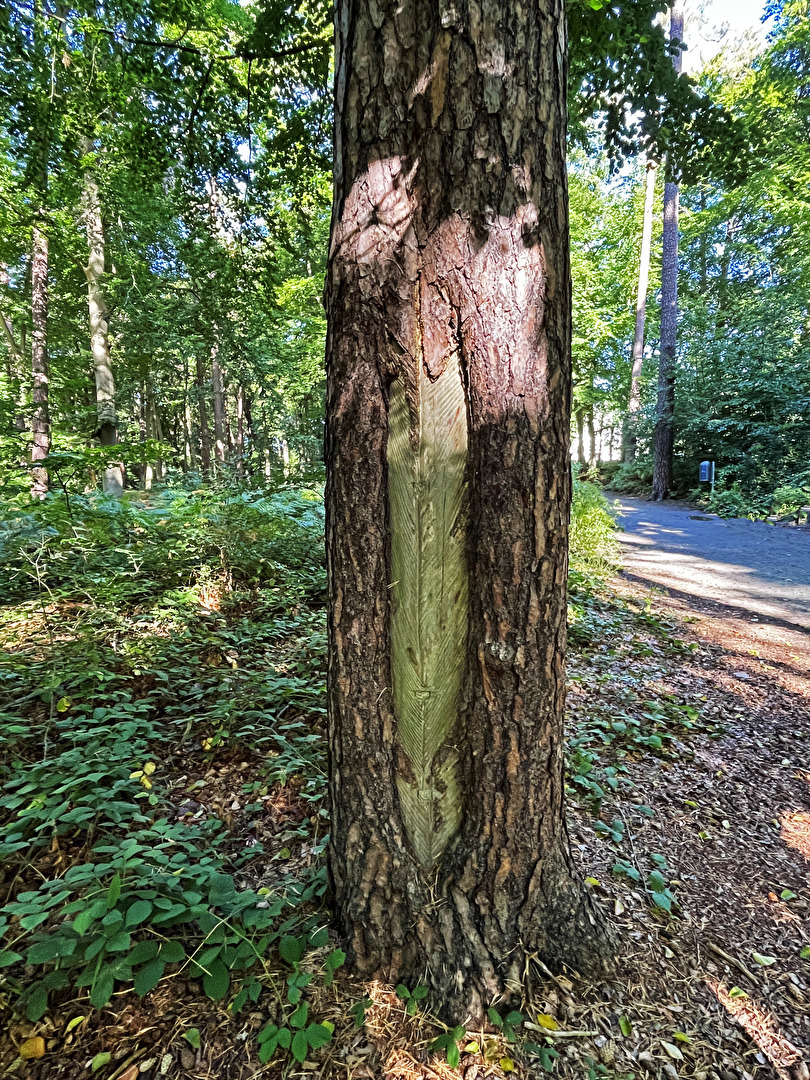











Slanting grooves in old pinesSlanting grooves in old pinesschrägen Rinnen in alten Kiefern
Those who grew up in the GDR remember the "flower pots" that once hung on the trees. They were used to collect the resin of the pine trees, which was important for the GDR economy. Resin collectors, as it was officially called, was a real profession and resin extraction was a significant industry.Before the sticky resin could flow, strenuous physical work had to be done, which during GDR times was mostly carried out by women, the resin workers. The female employees hired in the forestry operations cut the so-called streaks; from these tree wounds, the sticky "tree blood" flowed over the center of the wound into the resin pots.Those who grew up in the GDR remember the "flower pots" that once hung on the trees. They were used to collect the resin of the pine trees, which was important for the GDR economy. Resin collectors, as it was officially called, was a real profession and resin extraction was a significant industry.
Before the sticky resin could flow, strenuous physical work had to be done, which during GDR times was mostly carried out by women, the resin workers. The female employees hired in the forestry operations cut the so-called streaks; from these tree wounds, the sticky "tree blood" flowed over the center of the wound into the resin pots.Wer in der DDR aufwuchs, erinnert sich an die „Blumenpötte“, die einst an den Bäumen hingen. Sie dienten dazu, das Harz der Kiefern aufzufangen, das für die DDR-Wirtschaft wichtig war. Harzer oder Harzreißer, wie es offiziell hieß, war ein richtiger Beruf und die Harzgewinnung ein bedeutender Wirtschaftszweig.
Bevor das klebrige Harz fließen konnte, musste eine anstrengende körperliche Arbeit geleistet werden, die zu DDR-Zeiten überwiegend von Frauen, den Harzarbeiterinnen, erledigt wurde. Die in den Forstbetrieben angestellten Mitarbeiterinnen schnitten die die so genannten Lachten, aus diesen Baumwunden floss das klebrige „Baumblut“ über die Wundmitte in die Harztöpfe.