
Loch Rosettennebel NGC2244
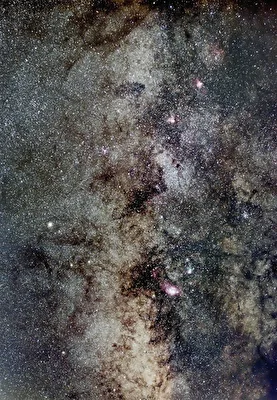
The Rosette Nebula is a diffuse emission nebula with an embedded open star cluster in the constellation Monoceros. The nebula measures 80.0' × 60.0' and has an apparent magnitude of 6.0. Today, the NGC objects NGC 2237 (observed by Lewis A. Swift in 1865), NGC 2238 (observed by Albert Marth on February 28, 1864), NGC 2239 (observed by John Herschel in March 1830), and NGC 2246 (observed by Lewis A. Swift on February 27, 1886) refer to different parts of the nebula. Historically, these four numbers designated slightly different star clusters and nebulae in this region.
At the center of the nebula is the open star cluster NGC 2244 = (NGC 2239) (observed by John Flamsteed on February 17, 1690), which causes the nebula to glow. The star cluster has an apparent magnitude of 4.8 and a diameter of 24'.' role="button">
Michael Geissel
The Rosette Nebula is a diffuse emission nebula with an embedded open star cluster in the constellation Monoceros. The nebula measures 80.0' × 60.0' and has an apparent magnitude of 6.0. Today, the NGC objects NGC 2237 (observed by Lewis A. Swift in 1865), NGC 2238 (observed by Albert Marth on February 28, 1864), NGC 2239 (observed by John Herschel in March 1830), and NGC 2246 (observed by Lewis A. Swift on February 27, 1886) refer to different parts of the nebula. Historically, these four numbers designated slightly different star clusters and nebulae in this region.
At the center of the nebula is the open star cluster NGC 2244 = (NGC 2239) (observed by John Flamsteed on February 17, 1690), which causes the nebula to glow. The star cluster has an apparent magnitude of 4.8 and a diameter of 24'.' role="button">




Information
Exif
| Date | 14.11.2022 |





Loch Rosettennebel NGC2244
Here's a photo on the theme of a hole. It feels like looking into a deep, endless hole that devours everything. What's behind it?The Rosette Nebula is a diffuse emission nebula with an embedded open star cluster in the constellation Monoceros. The nebula measures 80.0' × 60.0' and has an apparent magnitude of 6.0. Today, the NGC objects NGC 2237 (observed by Lewis A. Swift in 1865), NGC 2238 (observed by Albert Marth on February 28, 1864), NGC 2239 (observed by John Herschel in March 1830), and NGC 2246 (observed by Lewis A. Swift on February 27, 1886) refer to different parts of the nebula. Historically, these four numbers designated slightly different star clusters and nebulae in this region.
At the center of the nebula is the open star cluster NGC 2244 = (NGC 2239) (observed by John Flamsteed on February 17, 1690), which causes the nebula to glow. The star cluster has an apparent magnitude of 4.8 and a diameter of 24'.Here's a photo on the theme of a hole. It feels like looking into a deep, endless hole that devours everything. What's behind it?
The Rosette Nebula is a diffuse emission nebula with an embedded open star cluster in the constellation Monoceros. The nebula measures 80.0' × 60.0' and has an apparent magnitude of 6.0. Today, the NGC objects NGC 2237 (observed by Lewis A. Swift in 1865), NGC 2238 (observed by Albert Marth on February 28, 1864), NGC 2239 (observed by John Herschel in March 1830), and NGC 2246 (observed by Lewis A. Swift on February 27, 1886) refer to different parts of the nebula. Historically, these four numbers designated slightly different star clusters and nebulae in this region.
At the center of the nebula is the open star cluster NGC 2244 = (NGC 2239) (observed by John Flamsteed on February 17, 1690), which causes the nebula to glow. The star cluster has an apparent magnitude of 4.8 and a diameter of 24'.Hier mal ein Foto zum Thema Loch. Man hat das Gefühl in ein tiefes unendliches Loch zu schauen was alles verschlingt. Was ist dahinter?
Der Rosettennebel ist ein diffuser Emissionsnebel mit eingebettetem offenen Sternhaufen im Sternbild Einhorn. Der Nebel hat eine Größe von 80.0' × 60.0' und eine scheinbare Helligkeit von 6,0 mag. Heute bezeichnen die NGC-Objekte NGC 2237 (Beobachtung von Lewis A. Swift von 1865), NGC 2238 (Beobachtung von Albert Marth vom 28. Februar 1864), NGC 2239 (Beobachtung von John Herschel vom März 1830) und NGC 2246 (Beobachtung von Lewis A. Swift vom 27. Februar 1886) verschiedene Teile des Nebels. Historisch bezeichneten die vier Nummern etwas andere Sternanhäufungen und Nebel in diesem Bereich.
Im Zentrum des Nebels befindet sich der offene Sternhaufen NGC 2244 = (NGC 2239) (Beobachtung von John Flamsteed vom 17. Februar 1690), der den Nebel zum Leuchten bringt. Der Sternhaufen hat eine scheinbare Helligkeit von 4,8 mag und einen Durchmesser von 24'