Arsenal at Pfaffenteich in SchwerinArsenal at Pfaffenteich in SchwerinArsenal am Pfaffenteich in Schwerin
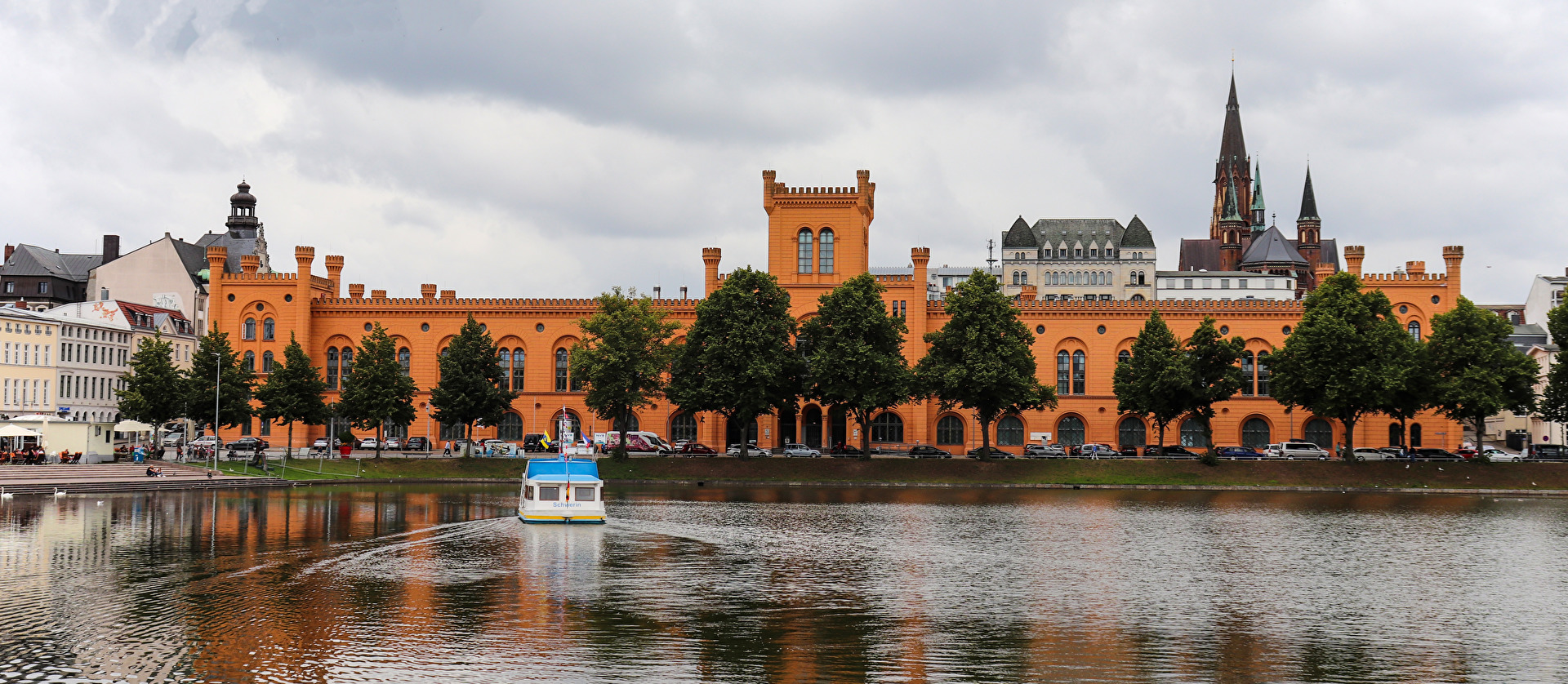
The Arsenal was built between 1840 (start of construction) and 1844 (first occupancy) based on a design by court architect Georg Adolf Demmler, under the supervision of Hermann Willebrand and Gottlieb Ruge, on the southwest shore of the Schwerin Pfaffenteich. The building, constructed from about six million bricks, cost 134,000 talers.
The Arsenal was initially used as an armory and after World War I as a police barracks. In this capacity, the building was named Adolf Hitler Barracks during the Third Reich. After a brief use as accommodation for refugees from World War II until July 1947, the building was almost seamlessly repurposed as the seat of the district authority of the German People's Police (BDVP). Since 1990, the Arsenal has been the seat of the Ministry of the Interior in Schwerin.
Source and excerpts from WikipediaThe Arsenal was built between 1840 (start of construction) and 1844 (first occupancy) based on a design by court architect Georg Adolf Demmler, under the supervision of Hermann Willebrand and Gottlieb Ruge, on the southwest shore of the Schwerin Pfaffenteich. The building, constructed from about six million bricks, cost 134,000 talers.
The Arsenal was initially used as an armory and after World War I as a police barracks. In this capacity, the building was named Adolf Hitler Barracks during the Third Reich. After a brief use as accommodation for refugees from World War II until July 1947, the building was almost seamlessly repurposed as the seat of the district authority of the German People's Police (BDVP). Since 1990, the Arsenal has been the seat of the Ministry of the Interior in Schwerin.
Source and excerpts from WikipediaDas Arsenal wurde in den Jahren 1840 (Baubeginn) bis 1844 (Erstbezug) nach einem Entwurf des Hofbaumeisters Georg Adolf Demmler unter Bauleitung von Hermann Willebrand und Gottlieb Ruge am Südwestufer des Schweriner Pfaffenteichs errichtet. Der aus etwa sechs Millionen Ziegelsteinen errichtete Bau kostete 134.000 Taler.
Das Arsenal wurde zunächst als Zeughaus und nach dem Ersten Weltkrieg als Polizeikaserne genutzt. In dieser Eigenschaft hatte das Gebäude während der Zeit des Dritten Reiches den Namen Adolf-Hitler-Kaserne. Nach kurzzeitiger Verwendung als Unterkunft für Flüchtlinge des Zweiten Weltkrieges bis zum Juli 1947 ging das Gebäude nahezu nahtlos in eine Nutzung als Sitz der Bezirksbehörde der Deutschen Volkspolizei (BDVP) über. Seit 1990 ist das Arsenal Sitz des Innenministeriums in Schwerin.
Quelle und Auszüge aus Wikipedia




Arsenal at Pfaffenteich in SchwerinArsenal at Pfaffenteich in SchwerinArsenal am Pfaffenteich in Schwerin
The Arsenal was built between 1840 (start of construction) and 1844 (first occupancy) based on a design by court architect Georg Adolf Demmler, under the supervision of Hermann Willebrand and Gottlieb Ruge, on the southwest shore of the Schwerin Pfaffenteich. The building, constructed from about six million bricks, cost 134,000 talers.The Arsenal was initially used as an armory and after World War I as a police barracks. In this capacity, the building was named Adolf Hitler Barracks during the Third Reich. After a brief use as accommodation for refugees from World War II until July 1947, the building was almost seamlessly repurposed as the seat of the district authority of the German People's Police (BDVP). Since 1990, the Arsenal has been the seat of the Ministry of the Interior in Schwerin.
Source and excerpts from WikipediaThe Arsenal was built between 1840 (start of construction) and 1844 (first occupancy) based on a design by court architect Georg Adolf Demmler, under the supervision of Hermann Willebrand and Gottlieb Ruge, on the southwest shore of the Schwerin Pfaffenteich. The building, constructed from about six million bricks, cost 134,000 talers.
The Arsenal was initially used as an armory and after World War I as a police barracks. In this capacity, the building was named Adolf Hitler Barracks during the Third Reich. After a brief use as accommodation for refugees from World War II until July 1947, the building was almost seamlessly repurposed as the seat of the district authority of the German People's Police (BDVP). Since 1990, the Arsenal has been the seat of the Ministry of the Interior in Schwerin.
Source and excerpts from WikipediaDas Arsenal wurde in den Jahren 1840 (Baubeginn) bis 1844 (Erstbezug) nach einem Entwurf des Hofbaumeisters Georg Adolf Demmler unter Bauleitung von Hermann Willebrand und Gottlieb Ruge am Südwestufer des Schweriner Pfaffenteichs errichtet. Der aus etwa sechs Millionen Ziegelsteinen errichtete Bau kostete 134.000 Taler.
Das Arsenal wurde zunächst als Zeughaus und nach dem Ersten Weltkrieg als Polizeikaserne genutzt. In dieser Eigenschaft hatte das Gebäude während der Zeit des Dritten Reiches den Namen Adolf-Hitler-Kaserne. Nach kurzzeitiger Verwendung als Unterkunft für Flüchtlinge des Zweiten Weltkrieges bis zum Juli 1947 ging das Gebäude nahezu nahtlos in eine Nutzung als Sitz der Bezirksbehörde der Deutschen Volkspolizei (BDVP) über. Seit 1990 ist das Arsenal Sitz des Innenministeriums in Schwerin.
Quelle und Auszüge aus Wikipedia