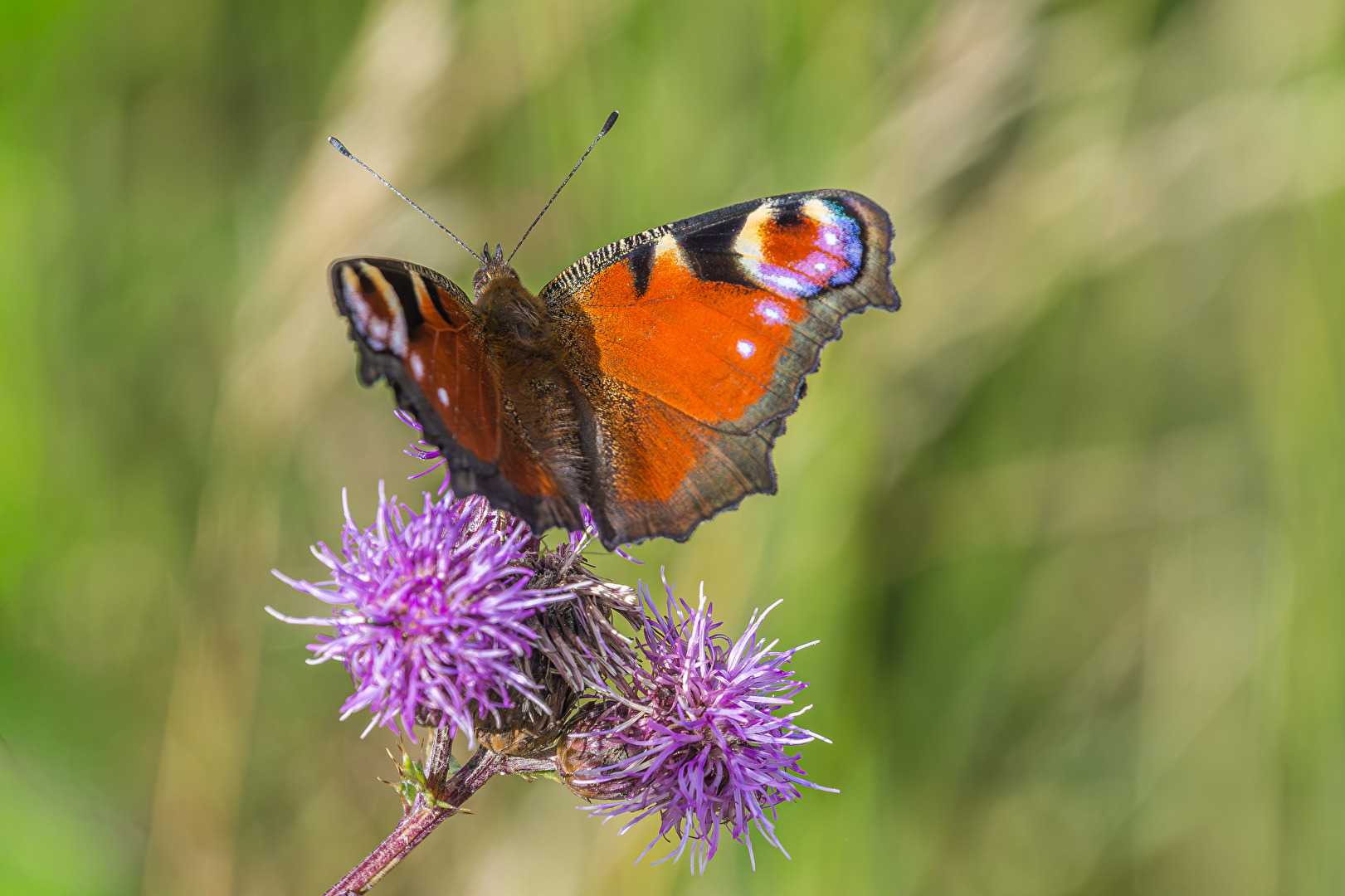
Peacock butterfly on a thistle flowerPeacock butterfly on a thistle flowerTagpfauenauge auf einer Distelblüte
This butterfly species is known for its striking, eye-like spots on the reddish-brown wings, which serve to deter predators. The butterflies feed on the nectar of various flowers, such as the thistle shown here. Their caterpillars are specialized and feed almost exclusively on the leaves of the stinging nettle.This butterfly species is known for its striking, eye-like spots on the reddish-brown wings, which serve to deter predators. The butterflies feed on the nectar of various flowers, such as the thistle shown here. Their caterpillars are specialized and feed almost exclusively on the leaves of the stinging nettle.Diese Schmetterlingsart ist für ihre auffälligen, augenähnlichen Flecken auf den rotbraunen Flügeln bekannt, die dazu dienen, Fressfeinde abzuschrecken. Die Falter ernähren sich vom Nektar verschiedener Blüten, wie beispielsweise der hier gezeigten Distel. Ihre Raupen sind spezialisiert und fressen fast ausschließlich Blätter der Großen Brennnessel.


















Peacock butterfly on a thistle flowerPeacock butterfly on a thistle flowerTagpfauenauge auf einer Distelblüte
This butterfly species is known for its striking, eye-like spots on the reddish-brown wings, which serve to deter predators. The butterflies feed on the nectar of various flowers, such as the thistle shown here. Their caterpillars are specialized and feed almost exclusively on the leaves of the stinging nettle.This butterfly species is known for its striking, eye-like spots on the reddish-brown wings, which serve to deter predators. The butterflies feed on the nectar of various flowers, such as the thistle shown here. Their caterpillars are specialized and feed almost exclusively on the leaves of the stinging nettle.Diese Schmetterlingsart ist für ihre auffälligen, augenähnlichen Flecken auf den rotbraunen Flügeln bekannt, die dazu dienen, Fressfeinde abzuschrecken. Die Falter ernähren sich vom Nektar verschiedener Blüten, wie beispielsweise der hier gezeigten Distel. Ihre Raupen sind spezialisiert und fressen fast ausschließlich Blätter der Großen Brennnessel.