

Bernd Tiemann
Photos
shared a Photo.
04.06.2026, 15:35

Fuerteventura
Since 1860, the then Puerto de Cabras (today's Puerto del Rosario) has been the island's capital. It replaced Antigua, which had only been the capital temporarily since 1834. Before that, since the Spanish conquest by Jean de Béthencourt, the place was Betancuria. The name Puerto del Rosario has been used since 1956, when it was renamed from Puerto de Cabras 'Goat Harbor' to Puerto del Rosario 'Harbor of the Rosary', after the Madonna of the Rosary, the town's patron saint. The valley south of the capital is still called Barranco de Cabras today.
Fuerteventura
Since 1860, the then Puerto de Cabras (today's Puerto del Rosario) has been the island's capital. It replaced Antigua, which had only been the capital temporarily since 1834. Before that, since the Spanish conquest by Jean de Béthencourt, the place was Betancuria. The name Puerto del Rosario has been used since 1956, when it was renamed from Puerto de Cabras 'Goat Harbor' to Puerto del Rosario 'Harbor of the Rosary', after the Madonna of the Rosary, the town's patron saint. The valley south of the capital is still called Barranco de Cabras today.
Fuerteventura
Seit 1860 ist das damalige Puerto de Cabras (das heutige Puerto del Rosario) Inselhauptstadt. Sie löste Antigua ab, die es nur vorübergehend seit 1834 war. Davor war es seit der spanischen Eroberung durch Jean de Béthencourt der Ort Betancuria. Den Namen Puerto del Rosario trägt der Ort seit 1956, als er von Puerto de Cabras ‚Ziegenhafen‘ in Puerto del Rosario ‚Hafen vom Rosenkranz‘ umbenannt wurde, nach der Madonna vom Rosenkranz, der Schutzpatronin des Ortes.[5] Das Tal südlich der Hauptstadt heißt auch heute noch Barranco de Cabras.
Bernd Tiemann
Photos
shared a Photo.
04.06.2026, 14:54

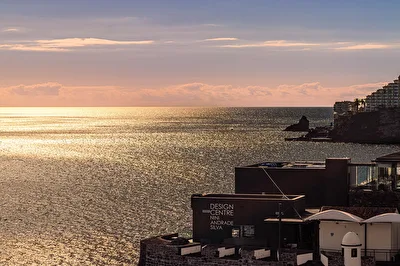
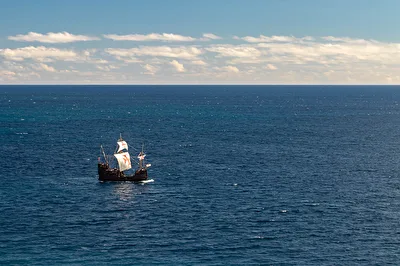
View from the harbor to the Atlantic.
The cruise port of Madeira is located in the heart of the capital, Funchal. Cruise ships dock directly at the waterfront promenade or at the large outer pier (South Pier). From there, you can reach the historic city center in just 15 to 20 minutes on foot.
View from the harbor to the Atlantic.
The cruise port of Madeira is located in the heart of the capital, Funchal. Cruise ships dock directly at the waterfront promenade or at the large outer pier (South Pier). From there, you can reach the historic city center in just 15 to 20 minutes on foot.
Blick vom Hafen auf den Atlantik.
Der Kreuzfahrthafen von Madeira liegt im Herzen der Hauptstadt Funchal. Kreuzfahrtschiffe legen direkt an der Uferpromenade oder an der großen Außenmole (South Pier) an. Von dort aus erreichen Sie das historische Stadtzentrum in nur 15 bis 20 Gehminuten.
Bernd Tiemann
Photos
shared a Photo.
03.06.2026, 18:24
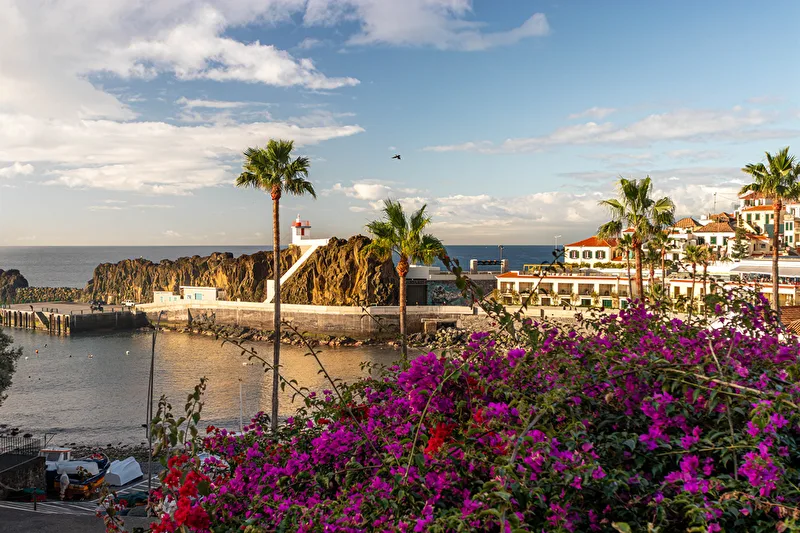
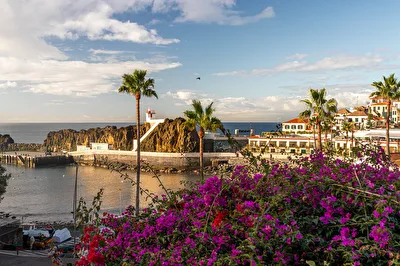
Madeira
Bernd Tiemann
Photos
shared a Photo.
20.05.2026, 17:41

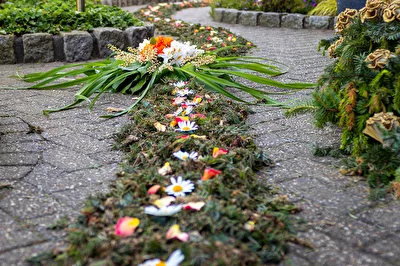
Golden Wedding Anniversary
Ist schon beeindruckend so lange zusammen.
Leider schaffen es heute nicht mehr so viele Paare. Bis das der Tod uns scheidet, dem wird heutzutage nicht mehr so viel Bedeutung zugetan.
Leider schaffen es heute nicht mehr so viele Paare. Bis das der Tod uns scheidet, dem wird heutzutage nicht mehr so viel Bedeutung zugetan.
Golden Wedding Anniversary
Ist schon beeindruckend so lange zusammen.
Leider schaffen es heute nicht mehr so viele Paare. Bis das der Tod uns scheidet, dem wird heutzutage nicht mehr so viel Bedeutung zugetan.
Leider schaffen es heute nicht mehr so viele Paare. Bis das der Tod uns scheidet, dem wird heutzutage nicht mehr so viel Bedeutung zugetan.
Goldene Hochzeit
Ist schon beeindruckend so lange zusammen.
Leider schaffen es heute nicht mehr so viele Paare. Bis das der Tod uns scheidet, dem wird heutzutage nicht mehr so viel Bedeutung zugetan.
Leider schaffen es heute nicht mehr so viele Paare. Bis das der Tod uns scheidet, dem wird heutzutage nicht mehr so viel Bedeutung zugetan.
Bernd Tiemann
Photos
shared a Photo.
19.05.2026, 15:20
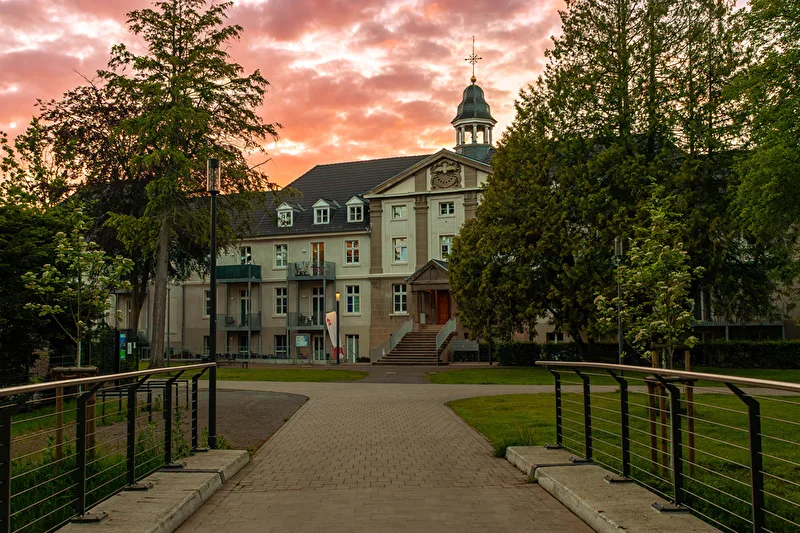
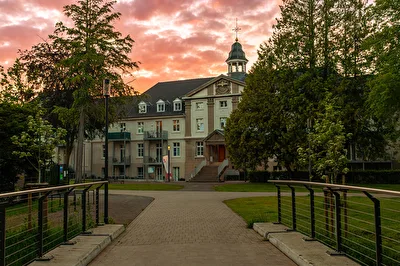
Former Monastery
Built in 1844, the monastery is the most distinctive landmark of the town of Rhede. Until the early 1980s, it was home to the Steyler Missionary Sisters, who managed it and trained young women in housekeeping. After the Klausenhof Academy took over the monastery in 1983 for a symbolic one euro, it fell into a deep sleep – use was only possible to a limited extent due to the dilapidated building structure. In 2013, intensive planning began for a comprehensive renovation and repurposing, and construction work started in 2020. "The goal was to revive the monastery as a lively meeting place for different generations and social groups," says Astrid Vogell, board member of the Klausenhof Academy Foundation. "With this inclusive concept, we have succeeded in preserving this important house for the region while creating space for the people of today."
Former Monastery
Built in 1844, the monastery is the most distinctive landmark of the town of Rhede. Until the early 1980s, it was home to the Steyler Missionary Sisters, who managed it and trained young women in housekeeping. After the Klausenhof Academy took over the monastery in 1983 for a symbolic one euro, it fell into a deep sleep – use was only possible to a limited extent due to the dilapidated building structure. In 2013, intensive planning began for a comprehensive renovation and repurposing, and construction work started in 2020. "The goal was to revive the monastery as a lively meeting place for different generations and social groups," says Astrid Vogell, board member of the Klausenhof Academy Foundation. "With this inclusive concept, we have succeeded in preserving this important house for the region while creating space for the people of today."
Ehemals Kloster
Das 1844 erbaute Kloster ist das markanteste Wahrzeichen der Stadt Rhede. Bis Anfang der 1980er Jahre war es Heimat der Steyler Missionsschwestern, die es bewirtschafteten und junge Frauen in der Hauswirtschaft ausbildeten. Nachdem die Akademie Klausenhof das Kloster 1983 für einen symbolischen Euro übernommen hatte, fiel es in einen Dornröschenschlaf – die Nutzung war aufgrund der maroden Bausubstanz nur noch eingeschränkt möglich. Im Jahr 2013 begannen die intensiven Planungen für eine umfassende Sanierung und Umnutzung, 2020 starteten die Bauarbeiten. „Ziel war es, das Kloster als lebendigen Treffpunkt für unterschiedliche Generationen und soziale Gruppen wiederzubeleben“, sagt Astrid Vogell, Vorstand der Stiftung Akademie Klausenhof. „Mit diesem inklusiven Konzept ist es uns gelungen, das für die Region bedeutende Haus zu erhalten und gleichzeitig Raum für die Menschen von heute zu schaffen.“
Bernd Tiemann
Photos
shared a Photo.
19.05.2026, 12:43
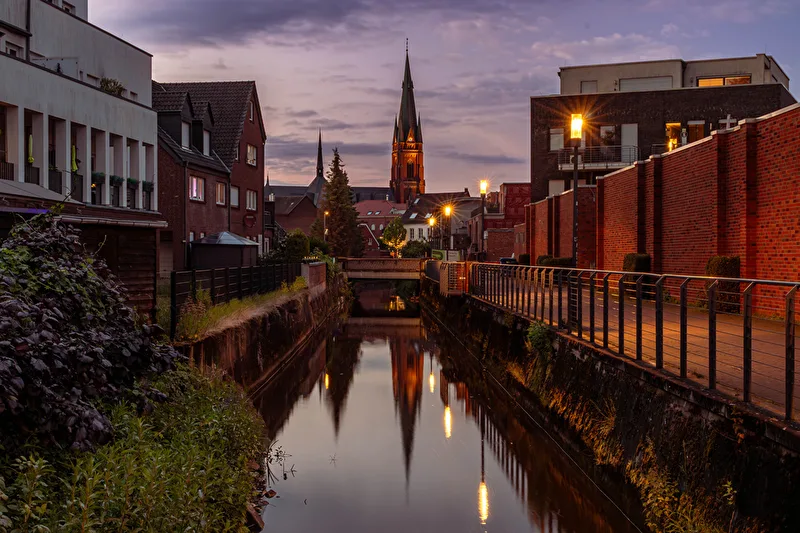
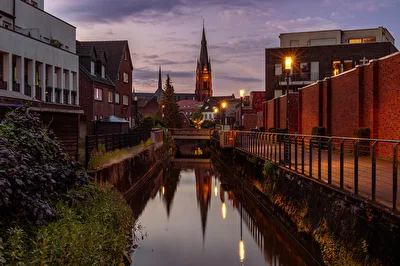
Evening in the City
The Rheder Bach originates in the municipality of Borken, in the southern part of the district of Burlo, near the recreational area Klostersee. Within the municipality of the city of Borken, the watercourse is also called Mühlenbach. From the municipal boundary to the city of Rhede, it is exclusively named Rheder Bach. It mostly flows in a northeast-southwest direction, passing through the area belonging to the natural region of the Lower Rhine Sand Plateau. The catchment area is characterized by predominantly sandy to sandy-loamy soils. The source elevation is about 56 meters above sea level, and the mouth into the Bocholter Aa is at around 28 meters above sea level.
Evening in the City
The Rheder Bach originates in the municipality of Borken, in the southern part of the district of Burlo, near the recreational area Klostersee. Within the municipality of the city of Borken, the watercourse is also called Mühlenbach. From the municipal boundary to the city of Rhede, it is exclusively named Rheder Bach. It mostly flows in a northeast-southwest direction, passing through the area belonging to the natural region of the Lower Rhine Sand Plateau. The catchment area is characterized by predominantly sandy to sandy-loamy soils. The source elevation is about 56 meters above sea level, and the mouth into the Bocholter Aa is at around 28 meters above sea level.
Abends in der City
Der Rheder Bach entspringt in der Gemeinde Borken, im Süden des Ortsteils Burlo, unweit des Naherholungsgebietes Klostersee. Im Gemeindegebiet der Stadt Borken wird das Gewässer auch Mühlenbach genannt. Ab der Gemeindegrenze zur Stadt Rhede trägt er ausschließlich den Namen Rheder Bach. Er verläuft überwiegend in nordöstlich-südwestlicher Richtung und durchfließt dabei das zum Naturraum der Niederrheinischen Sandplatte gehörende Gebiet. Das Einzugsgebiet ist geprägt von überwiegend sandigen bis sandig-lehmigen Böden. Die Quellhöhe liegt bei etwa 56 m ü. NN, der Mündungsbereich in die Bocholter Aa bei rund 28 m ü. NN.[
Bernd Tiemann
Photos
shared a Photo.
19.05.2026, 12:10
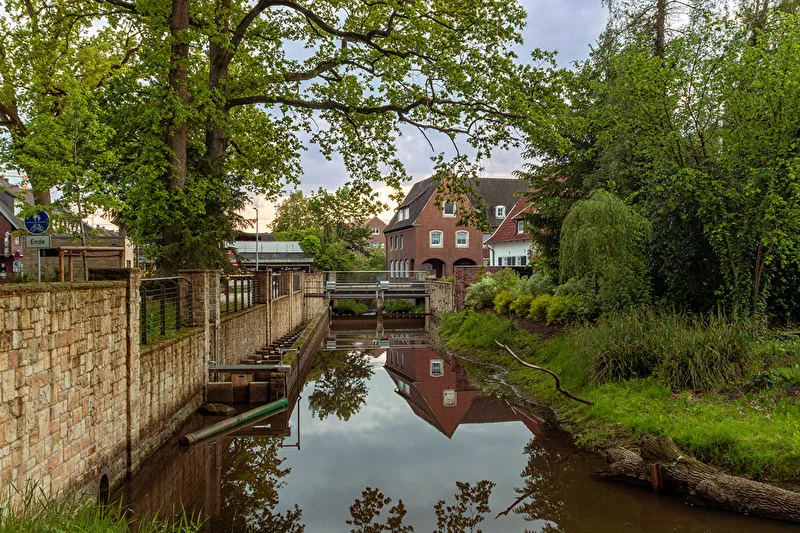
Reflection
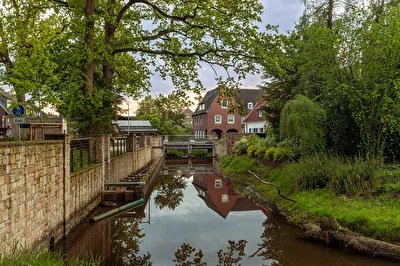
The modern floodgate on the Rheder Bach (corner of Schloßstraße/Münsterstraße) including its attractive recreational area has been completed.
Reflection
The modern floodgate on the Rheder Bach (corner of Schloßstraße/Münsterstraße) including its attractive recreational area has been completed.
Spiegelung
Das moderne Stauwehr am Rheder Bach (Ecke Schloßstraße/Münsterstraße) inklusive seiner attraktiven Aufenthaltsfläche ist fertiggestellt.
Bernd Tiemann
Photos
shared a Photo.
19.05.2026, 01:16
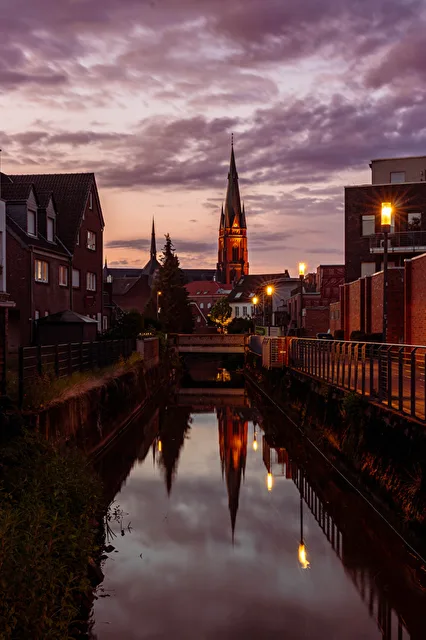
Evening Walk 2
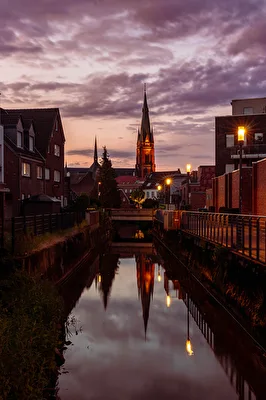
In the 12th century, the von Rhete family founded a proprietary church. Its parish was carved out from the mother church St. Georg in Bocholt. The Gothic hall church was repeatedly expanded until the 19th century. Due to space constraints, the building was demolished and a new one was constructed from 1898 to 1901 according to plans by Hilger Hertel. The consecration took place on June 12, 1901. The neo-Gothic, three-aisled brick hall with three choir apses has a polygonal central space. The tower is 77.5 meters high.
Evening Walk 2
In the 12th century, the von Rhete family founded a proprietary church. Its parish was carved out from the mother church St. Georg in Bocholt. The Gothic hall church was repeatedly expanded until the 19th century. Due to space constraints, the building was demolished and a new one was constructed from 1898 to 1901 according to plans by Hilger Hertel. The consecration took place on June 12, 1901. The neo-Gothic, three-aisled brick hall with three choir apses has a polygonal central space. The tower is 77.5 meters high.
Abendrundgang 2
Im 12. Jahrhundert gründete die Familie von Rhete eine Eigenkirche. Deren Kirchspiel wurde aus der Mutterkirche St. Georg in Bocholt abgepfarrt. Die gotische Hallenkirche wurde bis in das 19. Jahrhundert immer wieder ausgebaut. Aus Platzgründen wurde das Gebäude abgerissen und von 1898 bis 1901 nach Plänen von Hilger Hertel ein neues errichtet. Die Einweihung erfolgte am 12. Juni 1901. Die neugotische, dreischiffige Backsteinhalle mit drei Chorapsiden hat einen polygonalen Zentralraum. Der Turm ist 77,5 Meter hoch.
Bernd Tiemann
Photos
shared a Photo.
19.05.2026, 01:04

Evening stroll
In the 12th century, the von Rhete family founded a proprietary church. Its parish was carved out from the mother church St. Georg in Bocholt. The Gothic hall church was repeatedly expanded until the 19th century. Due to space constraints, the building was demolished and a new one was constructed from 1898 to 1901 according to plans by Hilger Hertel. The consecration took place on June 12, 1901. The neo-Gothic, three-aisled brick hall with three choir apses has a polygonal central space. The tower is 77.5 meters high.
Evening stroll
In the 12th century, the von Rhete family founded a proprietary church. Its parish was carved out from the mother church St. Georg in Bocholt. The Gothic hall church was repeatedly expanded until the 19th century. Due to space constraints, the building was demolished and a new one was constructed from 1898 to 1901 according to plans by Hilger Hertel. The consecration took place on June 12, 1901. The neo-Gothic, three-aisled brick hall with three choir apses has a polygonal central space. The tower is 77.5 meters high.
Abendrundgang
Im 12. Jahrhundert gründete die Familie von Rhete eine Eigenkirche. Deren Kirchspiel wurde aus der Mutterkirche St. Georg in Bocholt abgepfarrt. Die gotische Hallenkirche wurde bis in das 19. Jahrhundert immer wieder ausgebaut. Aus Platzgründen wurde das Gebäude abgerissen und von 1898 bis 1901 nach Plänen von Hilger Hertel ein neues errichtet. Die Einweihung erfolgte am 12. Juni 1901. Die neugotische, dreischiffige Backsteinhalle mit drei Chorapsiden hat einen polygonalen Zentralraum. Der Turm ist 77,5 Meter hoch.
Bernd Tiemann
Photos
shared a Photo.
14.05.2026, 15:44
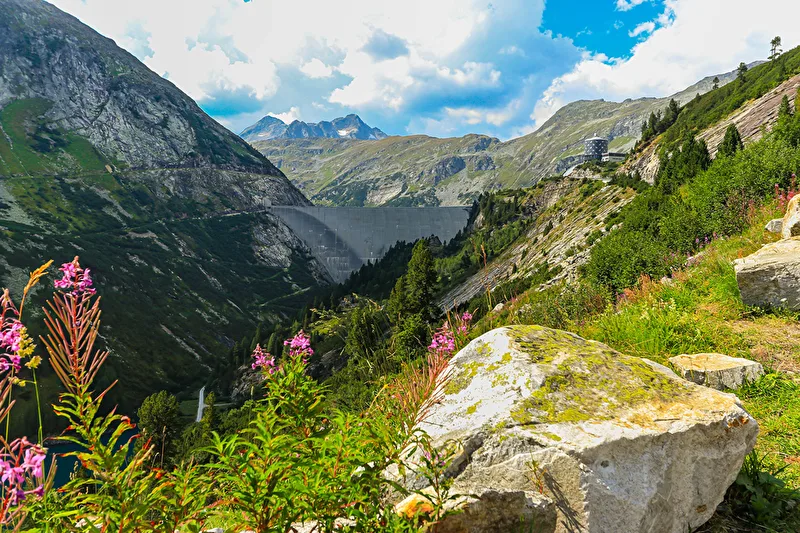
Dam wall
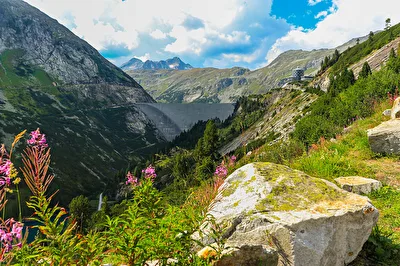
At an altitude of 1,933 meters above sea level is Austria's highest dam – the Kölnbrein Dam (height: 200 m) in Carinthia.
Dam wall
At an altitude of 1,933 meters above sea level is Austria's highest dam – the Kölnbrein Dam (height: 200 m) in Carinthia.
Staumauer
Auf 1.933 m Seehöhe befindet sich Österreichs höchste Staumauer – die Kölnbreinsperre (Höhe: 200 m) in Kärnten