It is one of the most striking and fascinating wild bees in our gardens. In this species, the males (up to 18 mm) are significantly larger than the females (about 12 mm) – which is very unusual for bees. They use existing cavities as nesting sites, such as tunnels in wood, cracks in walls, or the tubes of insect hotels. The brood cells are lined with plant wool, and the eggs are laid on a supply of pollen and nectar. The males of the garden wool bee are extremely territorial. They occupy a territory around nectar-rich plants (like your foxglove or woolly betony) and aggressively defend it. They patrol in front of the flowers and drive away any competitors or other insects (even much larger bumblebees). On their abdomen, they have five spines, which they use to ram intruders in flight to disable or chase them away. The garden wool bee is a skillful flyer and can hover in front of flowers like a hummingbird.It is one of the most striking and fascinating wild bees in our gardens. In this species, the males (up to 18 mm) are significantly larger than the females (about 12 mm) – which is very unusual for bees. They use existing cavities as nesting sites, such as tunnels in wood, cracks in walls, or the tubes of insect hotels. The brood cells are lined with plant wool, and the eggs are laid on a supply of pollen and nectar. The males of the garden wool bee are extremely territorial. They occupy a territory around nectar-rich plants (like your foxglove or woolly betony) and aggressively defend it. They patrol in front of the flowers and drive away any competitors or other insects (even much larger bumblebees). On their abdomen, they have five spines, which they use to ram intruders in flight to disable or chase them away. The garden wool bee is a skillful flyer and can hover in front of flowers like a hummingbird.Sie gehört zu den auffälligsten und spannendsten Wildbienen in unseren Gärten. Bei dieser Art sind die Männchen (bis 18 mm) deutlich größer als die Weibchen (ca. 12 mm) – das ist bei Bienen sehr ungewöhnlich. Als Nistplätze dienen vorhandene Hohlräume, wie Fraßgänge in Holz, Mauerritzen oder auch die Röhren von Insektenhotels. Die Brutzellen werden mit Pflanzenwolle ausgepolstert und darin die Eier auf einem Vorrat aus Pollen und Nektar abgelegt. Die Männchen der Garten-Wollbiene sind extrem territorial. Sie besetzen ein Revier rund um nektarreiche Pflanzen (wie deinen Fingerhut oder Woll-Ziest) und verteidigen dieses aggressiv. Sie patrouillieren vor den Blüten und vertreiben jeden Konkurrenten oder andere Insekten (sogar deutlich größere Hummeln). An ihrem Hinterleib besitzen sie fünf Dornen, mit denen sie Eindringlinge im Flug rammen, um sie flugunfähig zu machen oder zu vertreiben. Die Garten-Wollbiene ist ein geschickter Flieger und kann wie ein Kolibri vor Blüten in der Luft steh
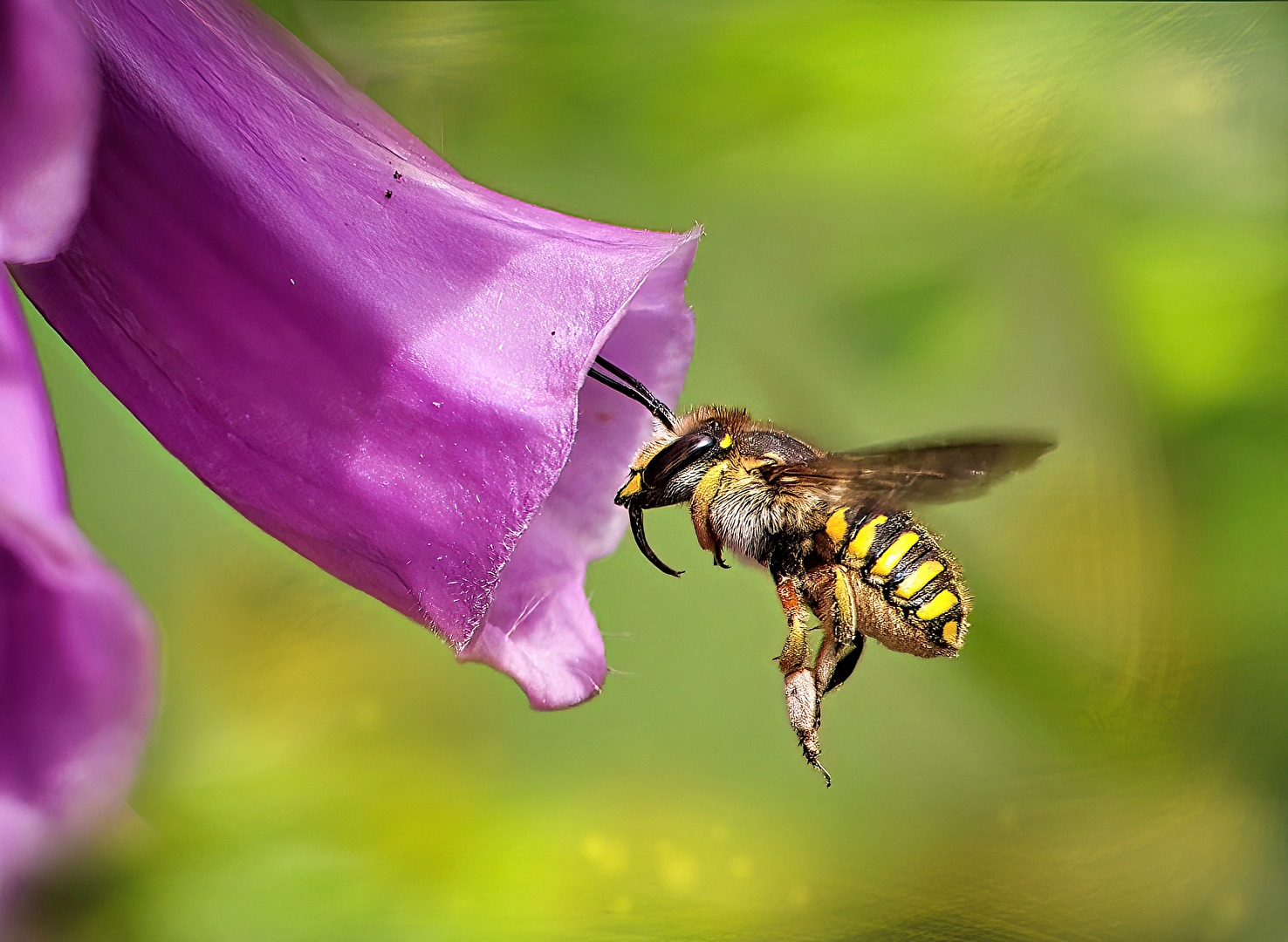




















Garden Wool Carder Bee (Anthidium manicatum)Garden Wool Carder Bee (Anthidium manicatum)Garten-Wollbiene (Anthidium manicatum)
It is one of the most striking and fascinating wild bees in our gardens. In this species, the males (up to 18 mm) are significantly larger than the females (about 12 mm) – which is very unusual for bees. They use existing cavities as nesting sites, such as tunnels in wood, cracks in walls, or the tubes of insect hotels. The brood cells are lined with plant wool, and the eggs are laid on a supply of pollen and nectar. The males of the garden wool bee are extremely territorial. They occupy a territory around nectar-rich plants (like your foxglove or woolly betony) and aggressively defend it. They patrol in front of the flowers and drive away any competitors or other insects (even much larger bumblebees). On their abdomen, they have five spines, which they use to ram intruders in flight to disable or chase them away. The garden wool bee is a skillful flyer and can hover in front of flowers like a hummingbird.It is one of the most striking and fascinating wild bees in our gardens. In this species, the males (up to 18 mm) are significantly larger than the females (about 12 mm) – which is very unusual for bees. They use existing cavities as nesting sites, such as tunnels in wood, cracks in walls, or the tubes of insect hotels. The brood cells are lined with plant wool, and the eggs are laid on a supply of pollen and nectar. The males of the garden wool bee are extremely territorial. They occupy a territory around nectar-rich plants (like your foxglove or woolly betony) and aggressively defend it. They patrol in front of the flowers and drive away any competitors or other insects (even much larger bumblebees). On their abdomen, they have five spines, which they use to ram intruders in flight to disable or chase them away. The garden wool bee is a skillful flyer and can hover in front of flowers like a hummingbird.Sie gehört zu den auffälligsten und spannendsten Wildbienen in unseren Gärten. Bei dieser Art sind die Männchen (bis 18 mm) deutlich größer als die Weibchen (ca. 12 mm) – das ist bei Bienen sehr ungewöhnlich. Als Nistplätze dienen vorhandene Hohlräume, wie Fraßgänge in Holz, Mauerritzen oder auch die Röhren von Insektenhotels. Die Brutzellen werden mit Pflanzenwolle ausgepolstert und darin die Eier auf einem Vorrat aus Pollen und Nektar abgelegt. Die Männchen der Garten-Wollbiene sind extrem territorial. Sie besetzen ein Revier rund um nektarreiche Pflanzen (wie deinen Fingerhut oder Woll-Ziest) und verteidigen dieses aggressiv. Sie patrouillieren vor den Blüten und vertreiben jeden Konkurrenten oder andere Insekten (sogar deutlich größere Hummeln). An ihrem Hinterleib besitzen sie fünf Dornen, mit denen sie Eindringlinge im Flug rammen, um sie flugunfähig zu machen oder zu vertreiben. Die Garten-Wollbiene ist ein geschickter Flieger und kann wie ein Kolibri vor Blüten in der Luft steh