The Last Partisan ...The Last Partisan ...Der letzte Partisan ...
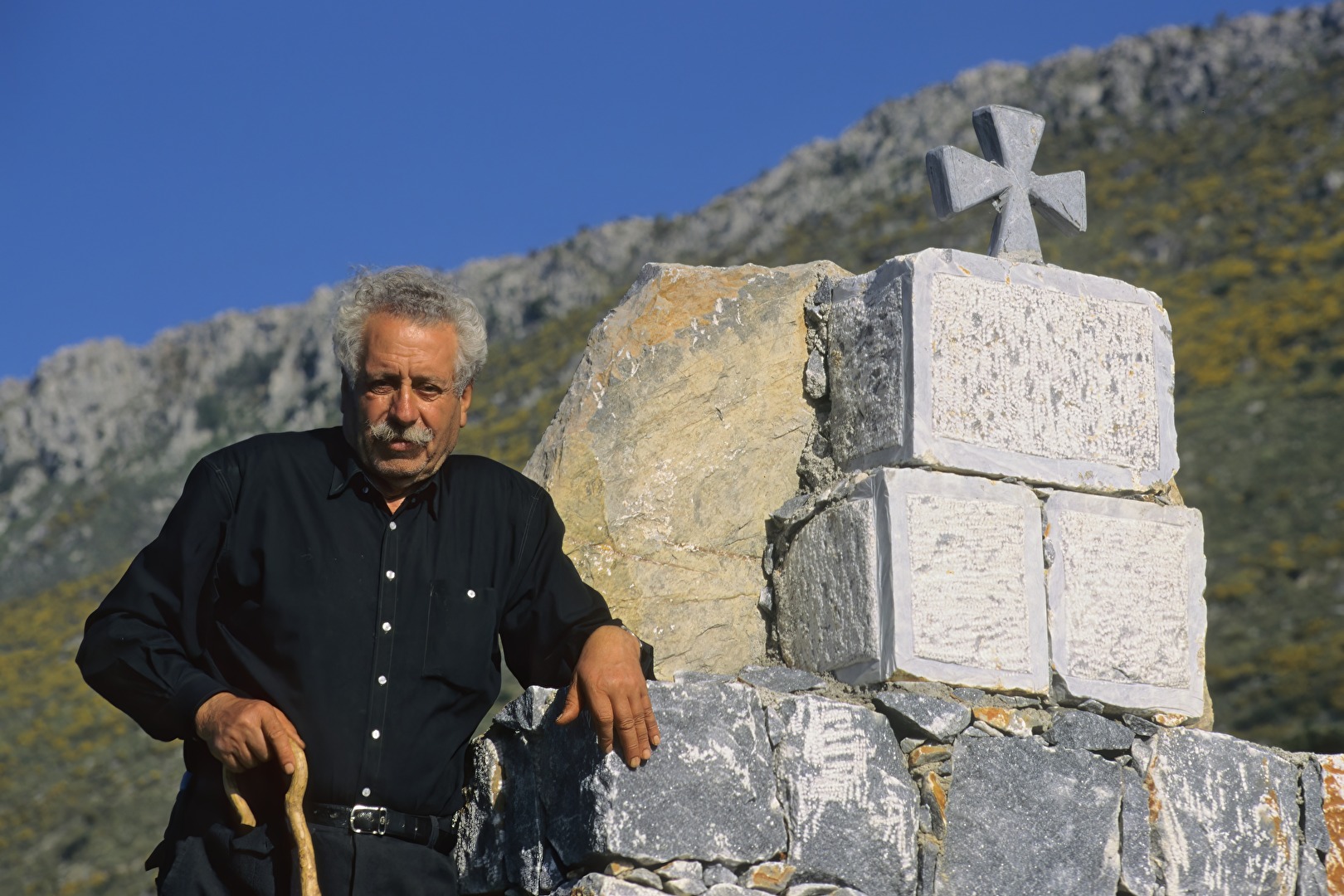
About 30 years ago, I had the surprising – and impressive – opportunity to meet the last partisan of Greece. Even decades after World War II, he lived together with a "colleague" in the mountains of Crete, from where they fought the military junta and the NATO base in their own way. It was only in the seventies that they were officially pardoned and could return to their home villages (where they had been secretly supported by the local population all along).
The picture shows him in front of his grave, which he had reserved for himself while still alive at the highest point of the local cemetery – his reasoning: I spent my life in the mountains and saw the world and the people from there – and it should be that way afterward as well...About 30 years ago, I had the surprising – and impressive – opportunity to meet the last partisan of Greece. Even decades after World War II, he lived together with a "colleague" in the mountains of Crete, from where they fought the military junta and the NATO base in their own way. It was only in the seventies that they were officially pardoned and could return to their home villages (where they had been secretly supported by the local population all along).
The picture shows him in front of his grave, which he had reserved for himself while still alive at the highest point of the local cemetery – his reasoning: I spent my life in the mountains and saw the world and the people from there – and it should be that way afterward as well...Vor etwa 30 Jahren hat ich die überraschende - und beeindruckende - Gelegenheit, den letzten Partisan Griechenlands zu treffen. Noch Jahrzehnte nach dem Zweiten Weltkrieg lebte er gemeinsam mit einem "Kollegen" in den Bergen Kretas, von wo aus sie auf ihre Weise die Militärjunta und die NATO(-Basis) bekämpften. Erst in den Siebzigern wurden sie offiziell begnadigt und konnten in ihre Heimatdörfer zurückkehren (von deren Bevölkerung sie die ganze Zeit heimlich unterstützt worden waren).
Das Bild zeigt ihn vor seiner Grabstätte, die er sich noch zu Lebzeiten an der höchsten Stelle des örtlichen Friedhofs reserviert hatte - Argument: Ich habe mein Leben in den Bergen verbracht und von dort die Welt und die Menschen gesehen - und so soll es auch danach sein ...







The Last Partisan ...The Last Partisan ...Der letzte Partisan ...
About 30 years ago, I had the surprising – and impressive – opportunity to meet the last partisan of Greece. Even decades after World War II, he lived together with a "colleague" in the mountains of Crete, from where they fought the military junta and the NATO base in their own way. It was only in the seventies that they were officially pardoned and could return to their home villages (where they had been secretly supported by the local population all along).The picture shows him in front of his grave, which he had reserved for himself while still alive at the highest point of the local cemetery – his reasoning: I spent my life in the mountains and saw the world and the people from there – and it should be that way afterward as well...About 30 years ago, I had the surprising – and impressive – opportunity to meet the last partisan of Greece. Even decades after World War II, he lived together with a "colleague" in the mountains of Crete, from where they fought the military junta and the NATO base in their own way. It was only in the seventies that they were officially pardoned and could return to their home villages (where they had been secretly supported by the local population all along).
The picture shows him in front of his grave, which he had reserved for himself while still alive at the highest point of the local cemetery – his reasoning: I spent my life in the mountains and saw the world and the people from there – and it should be that way afterward as well...Vor etwa 30 Jahren hat ich die überraschende - und beeindruckende - Gelegenheit, den letzten Partisan Griechenlands zu treffen. Noch Jahrzehnte nach dem Zweiten Weltkrieg lebte er gemeinsam mit einem "Kollegen" in den Bergen Kretas, von wo aus sie auf ihre Weise die Militärjunta und die NATO(-Basis) bekämpften. Erst in den Siebzigern wurden sie offiziell begnadigt und konnten in ihre Heimatdörfer zurückkehren (von deren Bevölkerung sie die ganze Zeit heimlich unterstützt worden waren).
Das Bild zeigt ihn vor seiner Grabstätte, die er sich noch zu Lebzeiten an der höchsten Stelle des örtlichen Friedhofs reserviert hatte - Argument: Ich habe mein Leben in den Bergen verbracht und von dort die Welt und die Menschen gesehen - und so soll es auch danach sein ...