The Three from the Gas StationThe Three from the Gas StationDie drei von der Tankstelle
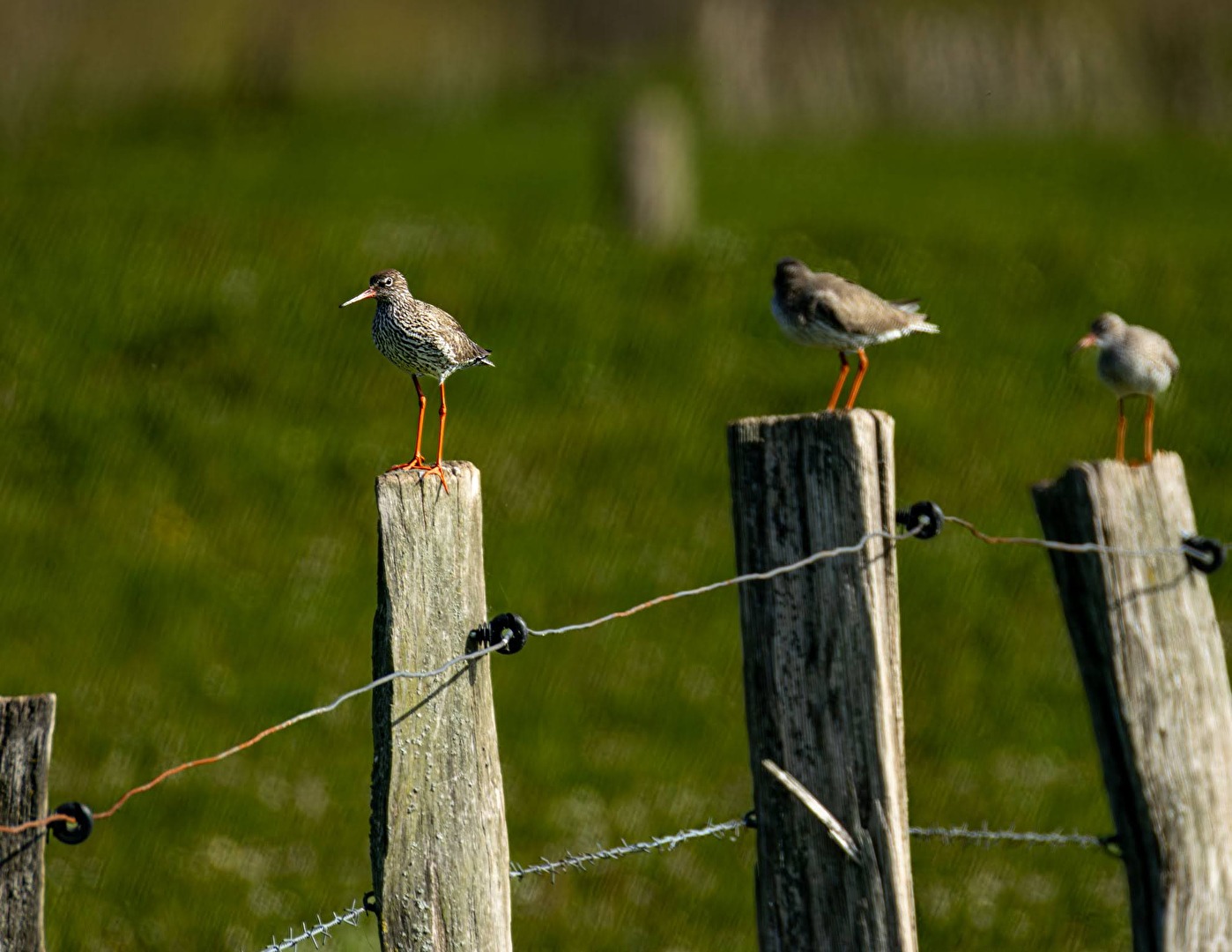
The redshank lives up to its name: both sexes have bright red legs. It is a characteristic bird of salt marshes, vigorously defending its brood against intruders. In Germany, about 15,000 pairs breed, 75 percent of them in coastal areas. But the medium-sized wader is also at home in marshes or wet meadows. The drainage of many areas, as well as predation by mammals and birds, make life difficult for the redshank.The redshank lives up to its name: both sexes have bright red legs. It is a characteristic bird of salt marshes, vigorously defending its brood against intruders. In Germany, about 15,000 pairs breed, 75 percent of them in coastal areas. But the medium-sized wader is also at home in marshes or wet meadows. The drainage of many areas, as well as predation by mammals and birds, make life difficult for the redshank.Der Rotschenkel macht seinem Namen alle Ehre: Beide Geschlechter haben leuchtend rote Beine. Er ist ein Charaktervogel von Salzwiesen, der lebhaft seine Brut vor Eindringlingen verteidigt. In Deutschland brüten etwa 15.000 Paare, 75 Prozent davon in Küstenbereichen. Aber auch in Sumpfgebieten oder auf Feuchtwiesen ist der mittelgroße Watvogel zu Hause. Die Trockenlegung vieler Flächen sowie die Prädation durch Säugetiere und Vögel machen dem Rotschenkel das Leben nicht leicht.













The Three from the Gas StationThe Three from the Gas StationDie drei von der Tankstelle
The redshank lives up to its name: both sexes have bright red legs. It is a characteristic bird of salt marshes, vigorously defending its brood against intruders. In Germany, about 15,000 pairs breed, 75 percent of them in coastal areas. But the medium-sized wader is also at home in marshes or wet meadows. The drainage of many areas, as well as predation by mammals and birds, make life difficult for the redshank.The redshank lives up to its name: both sexes have bright red legs. It is a characteristic bird of salt marshes, vigorously defending its brood against intruders. In Germany, about 15,000 pairs breed, 75 percent of them in coastal areas. But the medium-sized wader is also at home in marshes or wet meadows. The drainage of many areas, as well as predation by mammals and birds, make life difficult for the redshank.Der Rotschenkel macht seinem Namen alle Ehre: Beide Geschlechter haben leuchtend rote Beine. Er ist ein Charaktervogel von Salzwiesen, der lebhaft seine Brut vor Eindringlingen verteidigt. In Deutschland brüten etwa 15.000 Paare, 75 Prozent davon in Küstenbereichen. Aber auch in Sumpfgebieten oder auf Feuchtwiesen ist der mittelgroße Watvogel zu Hause. Die Trockenlegung vieler Flächen sowie die Prädation durch Säugetiere und Vögel machen dem Rotschenkel das Leben nicht leicht.