Cormorants are often seen sitting with their wings spread out. These birds do not have a preen gland to oil their feathers. There is a reason for this: cormorants are excellent divers. If they had an air cushion in their feathers, it would create buoyancy, making diving much more energy-consuming.
To dry off quickly after diving, they spread their wings wide and fan them back and forth.Cormorants are often seen sitting with their wings spread out. These birds do not have a preen gland to oil their feathers. There is a reason for this: cormorants are excellent divers. If they had an air cushion in their feathers, it would create buoyancy, making diving much more energy-consuming.
To dry off quickly after diving, they spread their wings wide and fan them back and forth.Kormorane sieht man häufig mit ausgebreiteten Flügel sitzen. Diese Vögel haben keine Fettdrüse, mit der sie ihr Gefieder einfetten können. Das hat seinen Grund: Kormorane sind sehr gute Taucher. Hätten sie nun ein Luftpolster im Gefieder, würde ein Auftrieb entstehen, und das Tauchen würde sie viel mehr Kraft kosten.
Um dann nach dem Tauchgang schnell wieder trocken zu werden, breiten sie ihre Flügel weit aus und fächeln sie hin und her.













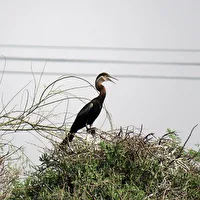




Cormorant (Phalacrocorax carbo)Cormorant (Phalacrocorax carbo)Kormoran (Phalacrocorax carbo)
Cormorants are often seen sitting with their wings spread out. These birds do not have a preen gland to oil their feathers. There is a reason for this: cormorants are excellent divers. If they had an air cushion in their feathers, it would create buoyancy, making diving much more energy-consuming.To dry off quickly after diving, they spread their wings wide and fan them back and forth.Cormorants are often seen sitting with their wings spread out. These birds do not have a preen gland to oil their feathers. There is a reason for this: cormorants are excellent divers. If they had an air cushion in their feathers, it would create buoyancy, making diving much more energy-consuming.
To dry off quickly after diving, they spread their wings wide and fan them back and forth.Kormorane sieht man häufig mit ausgebreiteten Flügel sitzen. Diese Vögel haben keine Fettdrüse, mit der sie ihr Gefieder einfetten können. Das hat seinen Grund: Kormorane sind sehr gute Taucher. Hätten sie nun ein Luftpolster im Gefieder, würde ein Auftrieb entstehen, und das Tauchen würde sie viel mehr Kraft kosten.
Um dann nach dem Tauchgang schnell wieder trocken zu werden, breiten sie ihre Flügel weit aus und fächeln sie hin und her.