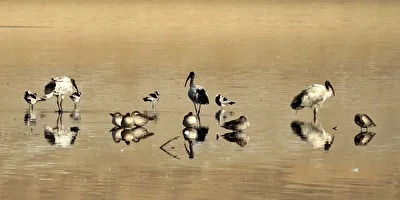
The crested guinea fowl prefers warm, dry, and open habitats such as forest edges, savannas, steppes, semi-deserts, or agricultural areas. Its regional distribution is determined by the availability of water. Large gatherings of the birds are often seen at water sources.The crested guinea fowl prefers warm, dry, and open habitats such as forest edges, savannas, steppes, semi-deserts, or agricultural areas. Its regional distribution is determined by the availability of water. Large gatherings of the birds are often seen at water sources.Das Helmperlhuhn bevorzugt warme, trockene und offene Lebensräume wie Waldränder, Savannen, Steppen, Halbwüsten oder landwirtschaftlich genutzte Flächen. Die regionale Verbreitung wird vom Wasserangebot bestimmt. Oft sieht man große Ansammlungen der Vögel an Wasserstellen.
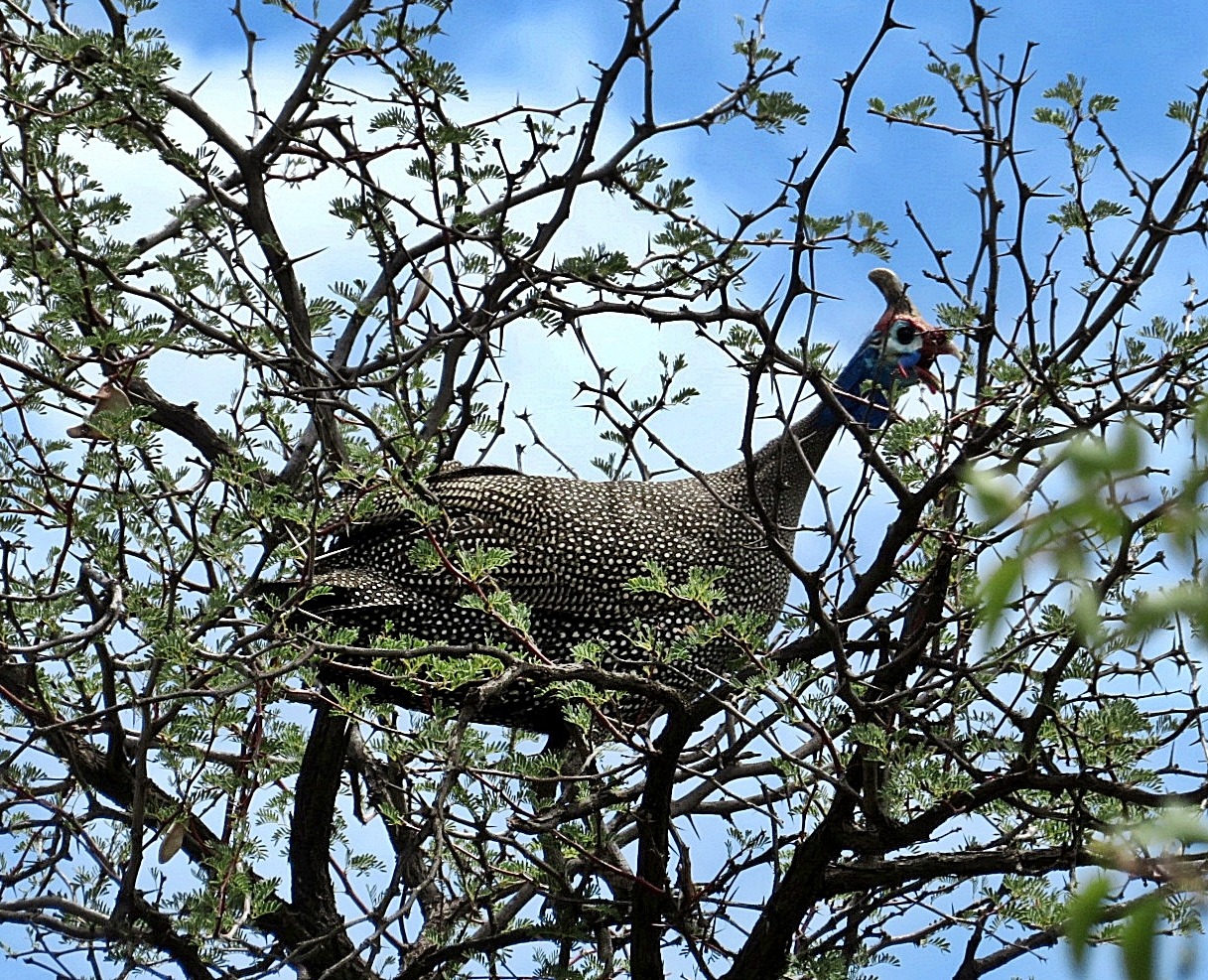

















Helmeted GuineafowlHelmeted GuineafowlHelmperlhuhn
The crested guinea fowl prefers warm, dry, and open habitats such as forest edges, savannas, steppes, semi-deserts, or agricultural areas. Its regional distribution is determined by the availability of water. Large gatherings of the birds are often seen at water sources.The crested guinea fowl prefers warm, dry, and open habitats such as forest edges, savannas, steppes, semi-deserts, or agricultural areas. Its regional distribution is determined by the availability of water. Large gatherings of the birds are often seen at water sources.Das Helmperlhuhn bevorzugt warme, trockene und offene Lebensräume wie Waldränder, Savannen, Steppen, Halbwüsten oder landwirtschaftlich genutzte Flächen. Die regionale Verbreitung wird vom Wasserangebot bestimmt. Oft sieht man große Ansammlungen der Vögel an Wasserstellen.