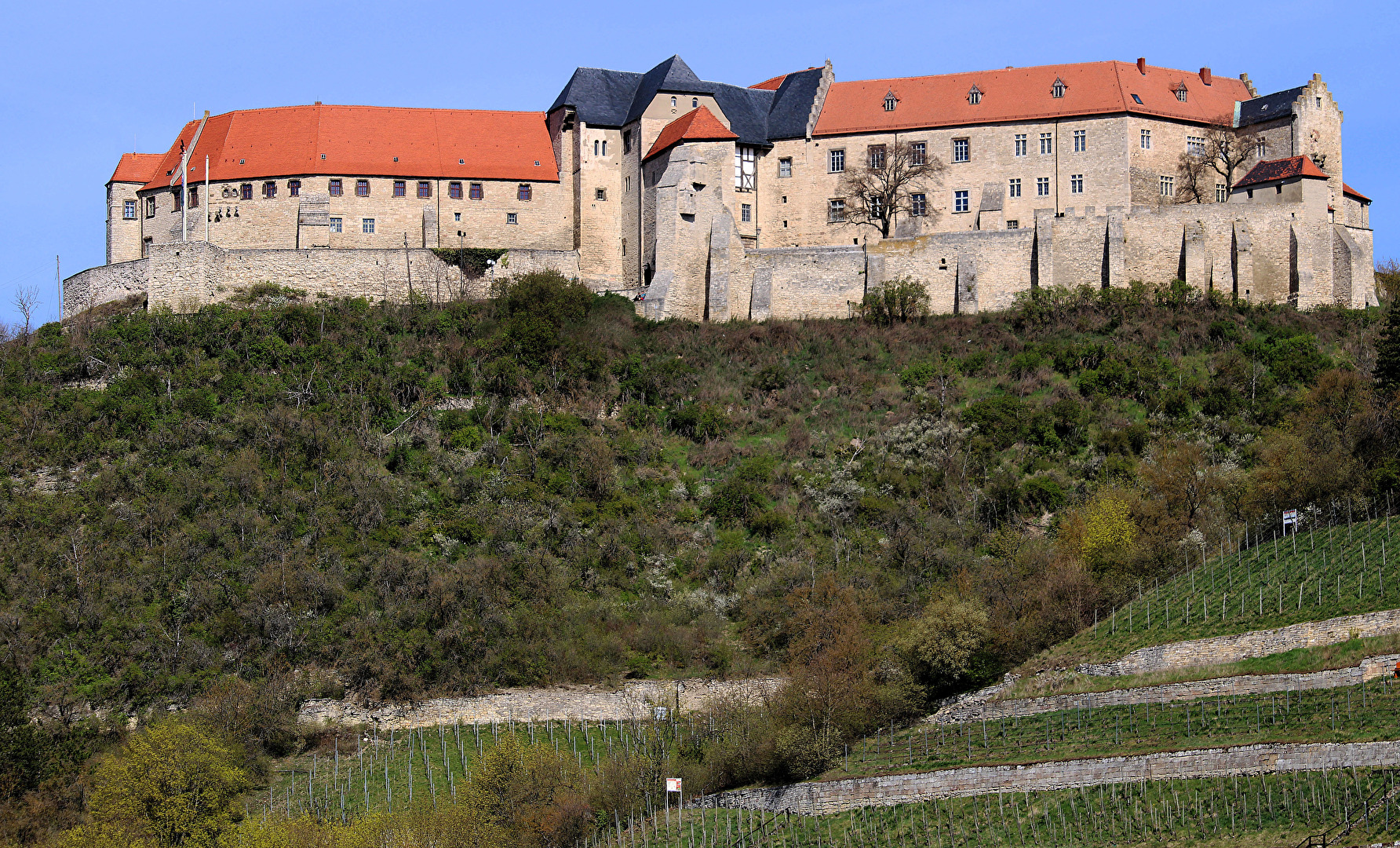
The present-day Neunburg Castle in Freyburg (on the Unstrut) was around 1490 a fortified castle and a Saxon office, which extended in the core area around the towns of Freyburg, Laucha, Nebra, and Mücheln and was strongly connected with the lordship of Neuenburg Castle. It included a variety of office villages, knight estates, and shares. The seat of the office was the Neunburg, which at that time functioned as an important Wettin administrative seat. An officeholder at the castle was the representative of the Saxon Elector.
The castle complex was converted into a hunting lodge in the mid-16th century.
In 1657, the castle became the seat of the Dukes of Saxony-Weißenfels.
In 1815, Prussia became the owner.
In 1983, the bergfried was reopened and after the reunification, the castle was restored and made accessible to the public.
Today, the castle belongs to the Cultural Foundation of Saxony-Anhalt.The present-day Neunburg Castle in Freyburg (on the Unstrut) was around 1490 a fortified castle and a Saxon office, which extended in the core area around the towns of Freyburg, Laucha, Nebra, and Mücheln and was strongly connected with the lordship of Neuenburg Castle. It included a variety of office villages, knight estates, and shares. The seat of the office was the Neunburg, which at that time functioned as an important Wettin administrative seat. An officeholder at the castle was the representative of the Saxon Elector.
The castle complex was converted into a hunting lodge in the mid-16th century.
In 1657, the castle became the seat of the Dukes of Saxony-Weißenfels.
In 1815, Prussia became the owner.
In 1983, the bergfried was reopened and after the reunification, the castle was restored and made accessible to the public.
Today, the castle belongs to the Cultural Foundation of Saxony-Anhalt.Das heutige Schloss Neunburg in Freyburg (an der Unstrut) war um 1490 eine wehrhafte Burg und ein sächsisches Amt, das sich im Kernbereich um die Städte Freyburg, Laucha, Nebra und Mücheln erstreckte und stark mit der Herrschaft der Burg Neuenburg verbunden war. Es umfasste eine Vielzahl von Amtsdörfern, Rittergütern und Anteilen. Der Sitz des Amtes war die Neunburg, sie fungierte zu dieser Zeit als wichtiger wettinischer Verwaltungssitz. Ein Amtmann auf der Burg, war der Vertreter des sächsischen Kurfürsten.
Die Burganlage wurde Mitte des 16. Jh. zu einem Jagdschloss umgebaut.
1657 wird die Burg Sitz der Herzöge von Sachsen-Weißenfels
1815 wird Preußen Eigentümer
1983 wird der Bergfried wiedereröffnet und nach der Wende wurde die Burg restauriert und dem Publikum zugänglich gemacht.
Heute gehört das Schloss der Kulturstiftung Sachsen-Anhalt.


An official seatAn official seatEin Amtsitz
The present-day Neunburg Castle in Freyburg (on the Unstrut) was around 1490 a fortified castle and a Saxon office, which extended in the core area around the towns of Freyburg, Laucha, Nebra, and Mücheln and was strongly connected with the lordship of Neuenburg Castle. It included a variety of office villages, knight estates, and shares. The seat of the office was the Neunburg, which at that time functioned as an important Wettin administrative seat. An officeholder at the castle was the representative of the Saxon Elector.The castle complex was converted into a hunting lodge in the mid-16th century.
In 1657, the castle became the seat of the Dukes of Saxony-Weißenfels.
In 1815, Prussia became the owner.
In 1983, the bergfried was reopened and after the reunification, the castle was restored and made accessible to the public.
Today, the castle belongs to the Cultural Foundation of Saxony-Anhalt.The present-day Neunburg Castle in Freyburg (on the Unstrut) was around 1490 a fortified castle and a Saxon office, which extended in the core area around the towns of Freyburg, Laucha, Nebra, and Mücheln and was strongly connected with the lordship of Neuenburg Castle. It included a variety of office villages, knight estates, and shares. The seat of the office was the Neunburg, which at that time functioned as an important Wettin administrative seat. An officeholder at the castle was the representative of the Saxon Elector.
The castle complex was converted into a hunting lodge in the mid-16th century.
In 1657, the castle became the seat of the Dukes of Saxony-Weißenfels.
In 1815, Prussia became the owner.
In 1983, the bergfried was reopened and after the reunification, the castle was restored and made accessible to the public.
Today, the castle belongs to the Cultural Foundation of Saxony-Anhalt.Das heutige Schloss Neunburg in Freyburg (an der Unstrut) war um 1490 eine wehrhafte Burg und ein sächsisches Amt, das sich im Kernbereich um die Städte Freyburg, Laucha, Nebra und Mücheln erstreckte und stark mit der Herrschaft der Burg Neuenburg verbunden war. Es umfasste eine Vielzahl von Amtsdörfern, Rittergütern und Anteilen. Der Sitz des Amtes war die Neunburg, sie fungierte zu dieser Zeit als wichtiger wettinischer Verwaltungssitz. Ein Amtmann auf der Burg, war der Vertreter des sächsischen Kurfürsten.
Die Burganlage wurde Mitte des 16. Jh. zu einem Jagdschloss umgebaut.
1657 wird die Burg Sitz der Herzöge von Sachsen-Weißenfels
1815 wird Preußen Eigentümer
1983 wird der Bergfried wiedereröffnet und nach der Wende wurde die Burg restauriert und dem Publikum zugänglich gemacht.
Heute gehört das Schloss der Kulturstiftung Sachsen-Anhalt.